“Modular,” “manufactured,” and “mobile” get used as if they mean the same thing. They don't. The difference comes down to the building code each one is built to, and that single distinction drives everything else: how the home is financed, how it's appraised, what it can be placed on, and how it holds value over time. Here's a plain-language breakdown.
Modular Homes
A modular home is built to the same building code as a site-built house, in Canada, that means the National Building Code and provincial amendments. The only real difference is where it's built: modules are assembled in a controlled facility, then transported and set on a permanent foundation. In our case, every unit is built to CSA A277, the standard that governs factory-built construction, and engineered to the National Building Code for climate zones 6 through 8.
Because a modular home meets the same code as conventional construction once it's set, it is treated as real property. It is appraised, mortgaged, and insured like any other house, and it appreciates the same way. For most buyers, that's the headline: you get the speed and quality control of factory building with none of the financing or resale penalties people associate with the other two categories. (We compare the two build methods directly in stick build vs. modular construction.)
Manufactured Homes
A manufactured home is built to a separate federal standard, historically the U.S. HUD code, and in Canada the CSA Z240 MH series, rather than the National Building Code that governs houses. It's built entirely in a factory on a permanent steel chassis and arrives essentially complete.
Manufactured homes can be an affordable path to ownership, but the different code has consequences: lenders often treat them as chattel (personal property) rather than real estate unless the home is permanently affixed and the chassis title is retired, which affects mortgage rates and terms. Appraisal and resale also behave differently than for a code-built house.
Mobile Homes
“Mobile home” is really a legacy term for units built before modern manufactured-housing standards were adopted. They were designed to be moved and were not built to today's structural, energy, or fire requirements. The word still gets attached to manufactured homes in casual conversation, but a true mobile home and a code-built modular house have almost nothing in common.
The Difference That Matters: Code
Strip away the marketing and it comes down to one question, what code was it built to?
- Modular, National Building Code / CSA A277. Treated as real property. Permanent foundation. Appreciates like a site-built home.
- Manufactured, CSA Z240 / HUD code. Often financed as chattel. Built on a permanent chassis.
- Mobile, pre-standard, designed for transport. Largely a historical category today.
Which One Holds Its Value?
Because a modular home is legally and structurally a house, it's the option that behaves like a conventional real-estate investment, same envelope performance, same warranties, same appreciation. That's why a modular home can carry a continuously insulated, airtight envelope and triple-pane low-E windows, energy-modelled to the National Building Code and backed by a comprehensive structural and workmanship warranty, just like a top-tier site build.
If you're weighing your options, the clearest way to see what a modular home can be is to request a free quote and we'll walk you through the differences for your specific site.
Common questions
What is the difference between a modular home and a manufactured home?
The difference comes down to the building code each one is built to. A modular home is built to the same building code as a site-built house, in Canada the National Building Code and provincial amendments, while a manufactured home is built to a separate federal standard, historically the U.S. HUD code and in Canada the CSA Z240 MH series.
Is a modular home considered real property?
Yes. Because a modular home meets the same code as conventional construction once it is set on a permanent foundation, it is treated as real property. It is appraised, mortgaged, and insured like any other house, and it appreciates the same way.
Why are manufactured homes financed differently?
Lenders often treat manufactured homes as chattel, meaning personal property, rather than real estate unless the home is permanently affixed and the chassis title is retired. That treatment affects mortgage rates and terms, and appraisal and resale also behave differently than for a code-built house.
What is a mobile home?
Mobile home is a legacy term for units built before modern manufactured-housing standards were adopted. They were designed to be moved and were not built to today's structural, energy, or fire requirements, so a true mobile home and a code-built modular house have almost nothing in common.

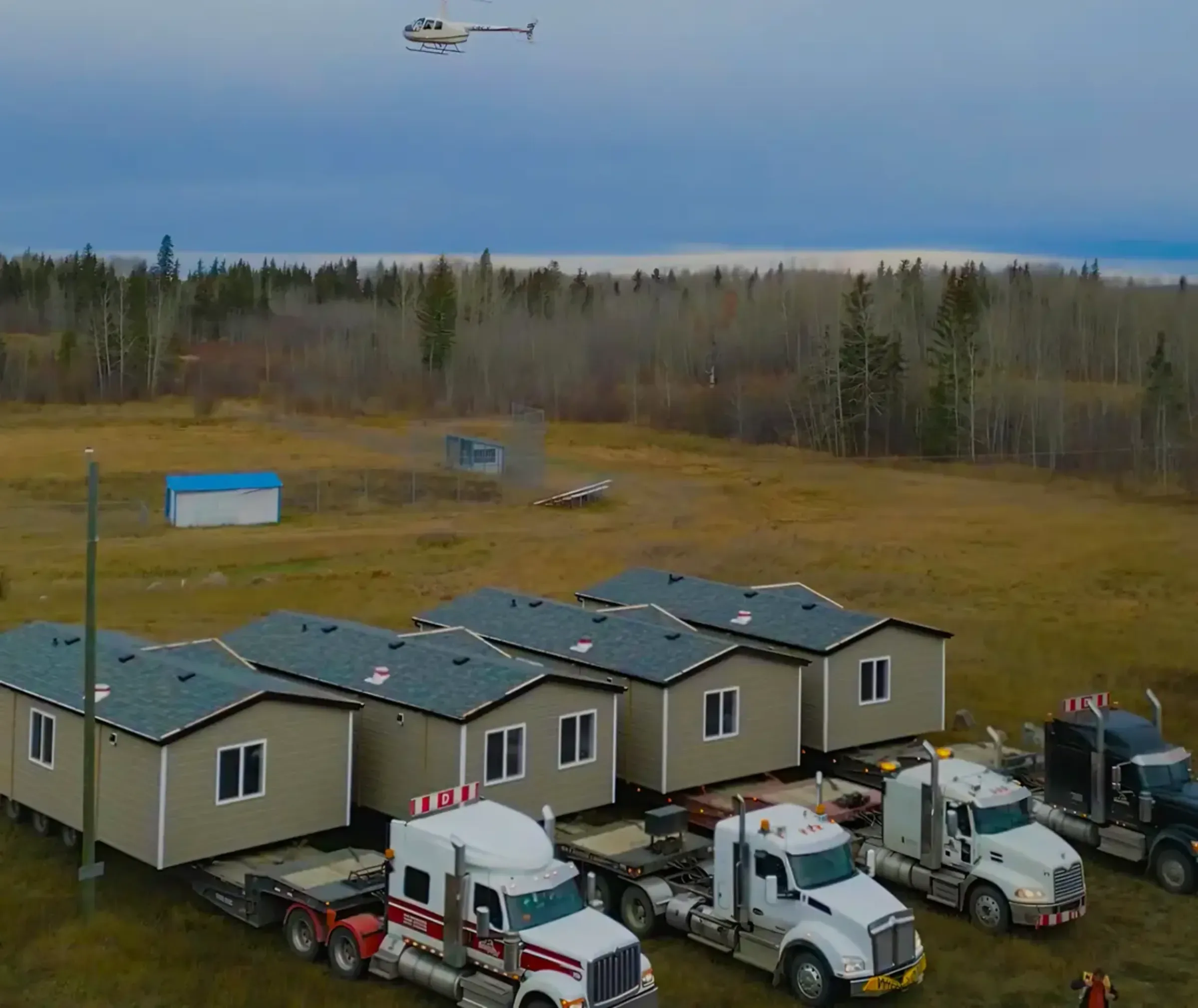
A Herauf modular home on a prairie road