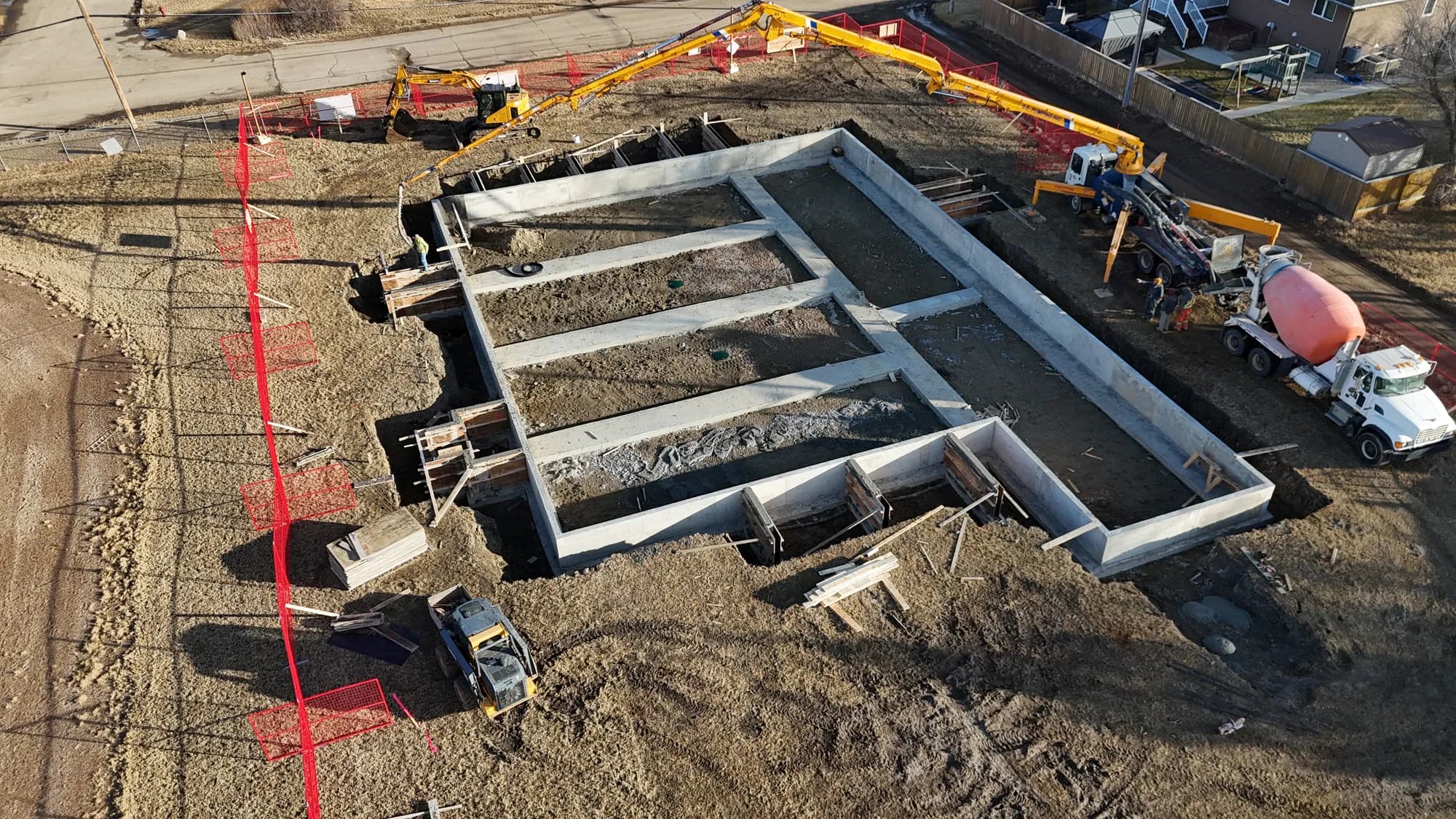
A modular home is only as solid as what it sits on. The foundation is the one part of the project that's still built on site, it's prepared in parallel while your modules are being assembled in the facility, which is a big part of why modular delivers up to 50% faster. Choosing the right foundation comes down to your soil, your climate, your budget, and how you want to use the space underneath. Here are the main options.
Slab-on-Grade
A reinforced concrete slab poured directly on prepared ground. It's the most economical and the fastest to prepare, with no crawlspace or basement to build. A slab works well on level, well-draining lots and pairs naturally with in-floor heating. The trade-offs: no under-floor storage, and mechanical services (plumbing, electrical) are cast into the slab, so they need to be planned precisely up front.
Crawlspace
A short foundation wall that raises the home above grade, leaving an accessible cavity beneath. A crawlspace keeps the structure off damp or frost-prone ground, makes plumbing and wiring easy to access and service later, and suits sloped or uneven sites better than a slab. It costs more than a slab but less than a full basement, often the practical middle ground.
Full Basement
A full-depth foundation that effectively adds a whole floor. A basement gives you the most usable square footage per dollar, room for mechanical systems, and valuable storage or living space, particularly attractive in colder regions where you're digging below the frost line anyway. It's the highest-cost and longest-lead foundation, and it needs a site where excavation is feasible.
Screw Piles & Pile Foundations
Steel screw piles (or driven piles) are turned deep into stable ground, and the home is set on a beam structure above them. Piles shine where conventional foundations struggle: poor or unstable soil, high water tables, permafrost, remote sites, and steep terrain. They require minimal excavation, can be installed quickly in most seasons, and leave a light footprint on the land, one reason they're common on the remote and northern projects we serve.
How to Choose
Four factors do most of the deciding:
- Soil & site, A geotechnical assessment tells you what the ground can carry. Unstable soil or a high water table pushes you toward piles.
- Climate, Foundations have to extend below the local frost line. In climate zones 6 through 8, that depth often makes a basement or frost-protected design the sensible choice.
- Budget, Slab is lowest, basement highest, with crawlspace and piles in between.
- Use of space, Want extra living area or storage? A basement earns its cost. Just need a warm, dry platform? A slab or crawlspace is plenty.
We Plan the Foundation With You
Because the foundation is the on-site half of a modular build, getting it right early is what keeps the timeline tight once the modules arrive. We'll match the foundation to your site conditions and budget as part of the quoting process, see building on rural and acreage sites for more on site prep, or request a free quote and we'll assess your lot together.
Common questions
What foundation options work for a modular home?
The main options are slab-on-grade, crawlspace, full basement, and screw or driven piles. Choosing between them comes down to your soil, your climate, your budget, and how you want to use the space underneath.
What is the most economical foundation for a modular home?
A slab-on-grade is the most economical and the fastest to prepare, with no crawlspace or basement to build. It works well on level, well-draining lots and pairs naturally with in-floor heating, though it leaves no under-floor storage and requires plumbing and electrical to be planned precisely up front.
What foundation is best for poor soil or a remote site?
Screw piles or driven piles shine where conventional foundations struggle, including poor or unstable soil, high water tables, permafrost, remote sites, and steep terrain. They require minimal excavation, can be installed quickly in most seasons, and leave a light footprint on the land.
Is the foundation built before the modular home arrives?
Yes. The foundation is the one part of the project that is still built on site, and it is prepared in parallel while your modules are being assembled in the facility. That parallel work is a big part of why modular delivers up to 50% faster.
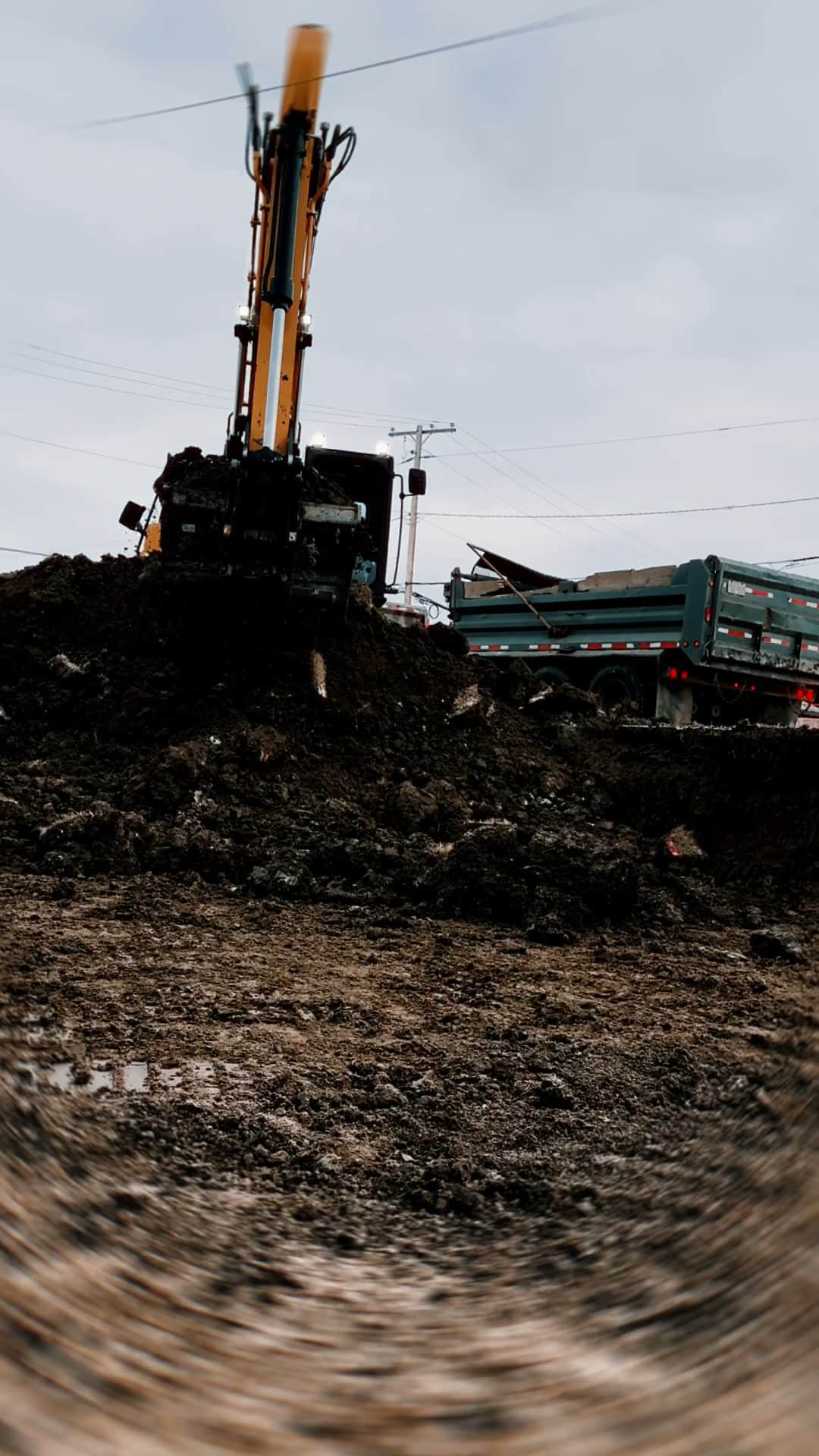
Excavation and site work before a module arrives