
On a rural property, the hard part of building is usually not the house. It is getting trades, materials and inspections to a site an hour from town, through a prairie winter. Modular construction moves most of that work into a plant and leaves the site with four jobs: an access route, a foundation, water and sewage, and power. This guide explains why modular suits acreages, farms and rural lots, and walks through those four jobs in the order they usually need to start.
Why modular suits rural sites
CMHC lists quick installation in remote rural areas among the advantages of factory-built housing, along with a climate-controlled plant that lets construction carry on year-round. On a rural build those two points do most of the work.
- The trades come to the plant, not to your lot. Framing, insulation, drywall, plumbing, wiring and finishing happen in the factory. On site, the work is the foundation, the services, and a few days of setting and connecting.
- Winter does not stop the build. A fall order can be built over the winter and set in spring. Frozen ground can even help, because it carries heavy loads that spring thaw cannot.
- The house is not left open on a remote site. A building framed in a plant is not exposed to weather, or to theft from an unattended site, while it waits for the next trade.
Most Herauf homes are manufactured and delivered in roughly 16 weeks, and they arrive with plumbing, electrical and HVAC already installed, so connection is quick once services reach the foundation. Every home meets or exceeds CSA A277 and the National Building Code for climate zones 6 to 8, with a continuously insulated, airtight envelope and triple-pane low-E windows.
Step 1: Check the route in
A finished home travels as a wide, heavy load, so the last few kilometres matter more than the highway. Walk the final approach and note narrow bridges, tight turns, soft ground, culverts and overhead lines, and make sure there is room on the lot for a crane or picker truck to set up beside the foundation.
On Saskatchewan highways, moving a large building needs a permit administered by SGI. Buildings wider than 7.32 m (24 ft) have a notice period before they can move, 24 hours on provincial highways or 48 hours where the route includes municipal roads. A load more than 5.18 m high needs an approval number from SaskPower, and other approvals, such as from SaskTel or the railways, may be needed depending on what the route crosses. Delivery distance and installation are part of every Herauf quote, so the route is something to look at before the price is final.
Step 2: Settle the permits
Rural approvals usually come in two parts. A development permit decides where the house can sit (setbacks from property lines, roads and water), and a building permit covers how it is built. Most municipalities want the development permit first, and in Saskatchewan each rural municipality sets its own requirements. Budget four to ten weeks, and longer if the use is discretionary. Read the Certificate of Title for caveats, easements and restrictive covenants before you commit to a building site. The land check tool shows which municipality most likely issues permits for a property, and permits for ready-to-move homes in Saskatchewan are covered in detail in RTM home permits in Saskatchewan.
Step 3: Plan water and sewage early
A rural home almost always means a well or cistern and a private sewage system, and the sewage system has to be designed and permitted before the house is installed.
- Saskatchewan. Public health inspectors issue private sewage permits, through the Saskatchewan Health Authority or, inside their limits, the cities of Regina and Lloydminster. The application includes a site evaluation report and construction drawings. From November 1, 2026, anyone designing a system other than a standard septic tank or a jet-type system has to hold provincial certification, so line up a certified designer before you need one.
- Alberta. A permit is required to design and install a private sewage system, and the contractor must hold a current certificate of competency. Systems are built to the Alberta Private Sewage Systems Standard of Practice.
For drinking water, Saskatchewan's Water Security Agency advises rural water users to test their private wells and cisterns regularly. Sample bottles and forms come from the Roy Romanow Provincial Laboratory in Regina. Test a new well before move-in, and keep testing.
Step 4: Call the power utility now
Find the nearest pole or connection point and call the utility as soon as the site is chosen. Line extensions have lead times of their own, and a house that arrives before the power does cannot be lived in. Electric heat comes standard on Herauf homes, and solar is an option. For commercial buildings on unserviced sites, Herauf's plans can be specified with self-contained water and sewer in 400, 600 or 800 gallon systems.
Choose a foundation for the ground you have
Screw piles install quickly in most prairie soils and avoid a large excavation, which suits acreages and sites where a concrete truck is hard to bring in. A basement or crawlspace is also common under a rural home. Whatever you choose, it has to reach below frost or be designed for the site, and it should be finished before the delivery week. The options and the code rules are in foundations for a modular home.
Financing a home on rural land
CMHC's Prefab Plus mortgage insurance covers prefabricated homes, including modular homes, placed on a permanent foundation. Two of its conditions matter on rural land: the home must be suitable for full-time, year-round occupancy, and the property must have year-round vehicular access. A cabin lot reached only in summer may need a different kind of financing. More on lenders is in financing a modular home.
Not just houses
Rural work is not only residential. Herauf has built an agro centre office for Federated Co-op in Neepawa, an agricultural program office for Suncrest College in Yorkton, and a washroom and shower building for a glamping resort at Lake Diefenbaker. Lake lots and cabins have their own article, modular cabins and cottages, and homes that are built complete and moved to the land are on RTM homes.
Where to start
Work through the site-readiness checklist, which puts access, foundation, services, permits and timing in order, then request a free written quote with the land location and a photo of the approach. Quotes usually come back within one business day. You can also call 1.639.382.4106.
Sources
- Canada Mortgage and Housing Corporation, Manufactured housing: quality at an affordable price
- Government of Saskatchewan, Apply to move a building
- Government of Saskatchewan, Private sewage works
- Government of Alberta, Private sewage codes and standards
- Water Security Agency (Saskatchewan), Testing private water wells
- Canada Mortgage and Housing Corporation, CMHC Prefab Plus
Common questions
Can a modular home be delivered to a rural acreage?
Usually, yes, as long as the final approach can carry a wide, heavy load and there is room beside the foundation for a crane or picker truck. Check narrow bridges, tight turns, soft ground and overhead lines on the route. In Saskatchewan, large building moves on highways need a permit administered by SGI, and loads over 5.18 m high need a SaskPower approval number.
Do I need a septic permit before a modular home arrives?
Yes. A rural home needs its sewage system designed and permitted before installation. In Saskatchewan, public health inspectors issue the permit, and from November 1, 2026 most systems other than a standard septic tank or a jet-type system must be designed by a provincially certified designer. In Alberta, a permit is required and the installer must hold a certificate of competency.
How long do rural approvals take?
Budget four to ten weeks for development and building permits, longer for a discretionary use or a relocated dwelling. Most municipalities want the development permit before the building permit, and in Saskatchewan each rural municipality sets its own requirements, so call the office early.
Can I get a mortgage for a modular home on rural land?
Often, yes. CMHC's Prefab Plus mortgage insurance covers prefabricated homes, including modular homes, on a permanent foundation, provided the home is suitable for year-round occupancy and the property has year-round vehicular access. A seasonal-access lot may need a different kind of financing.
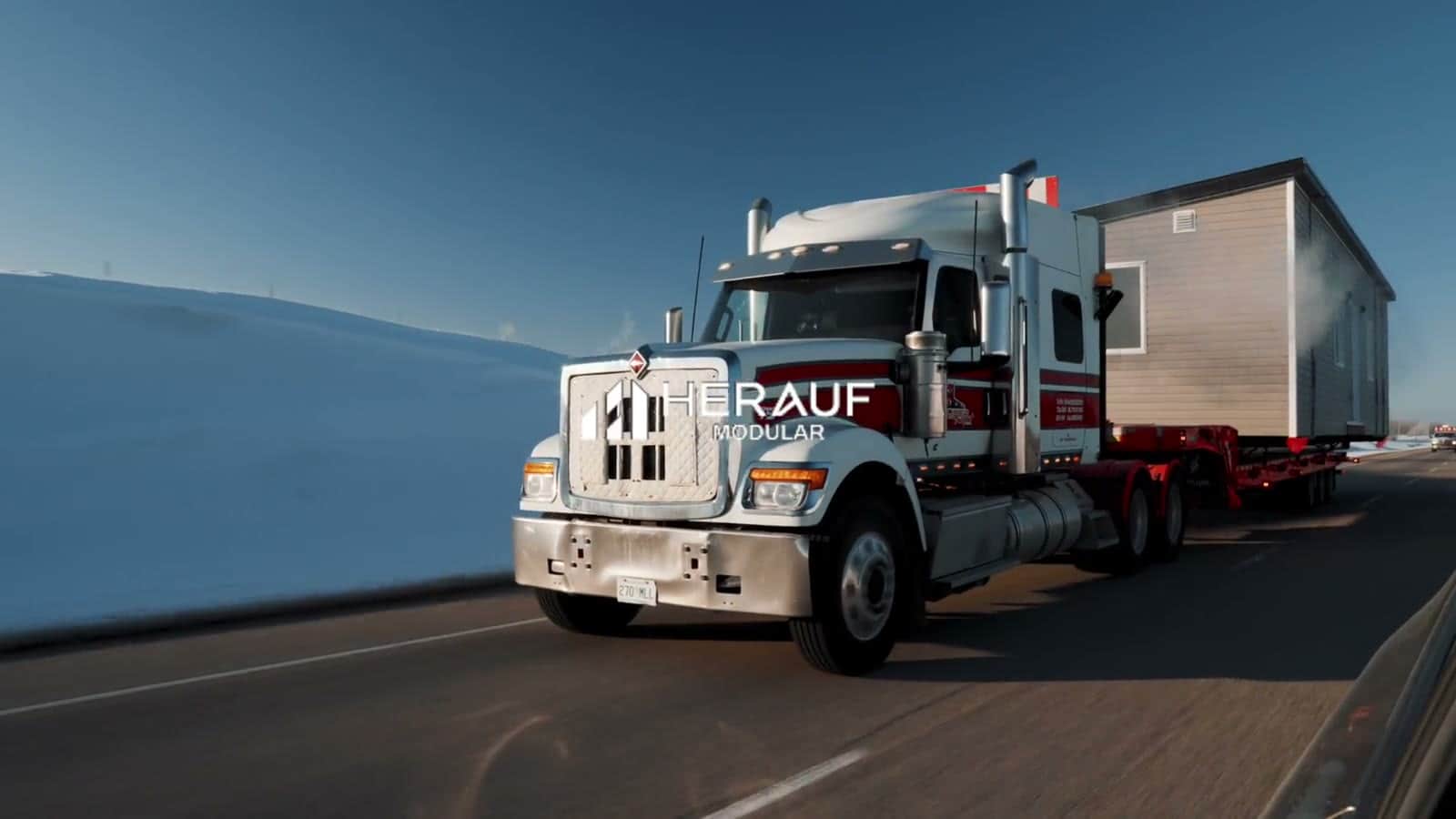
A Herauf home delivered to a rural acreage