For a developer, modular construction changes three things: how long money is tied up before a project earns, when the design and price have to be fixed, and how easily a proven building can be repeated on the next site. And since May 2026, financing a modular rental project is more straightforward, because CMHC now insures modular construction across all its multi-unit products. This article sets out each of those, including the trade-offs, and where Herauf fits in.
Time is the carrying cost
Every month between buying land and stabilized occupancy carries interest, taxes and overhead with no income against them. Modular shortens the construction part of that period by running two jobs at once: the building is manufactured while the site is excavated, the foundation poured and the services brought in. The Modular Building Institute, the industry's trade association, says this lets projects finish 30% to 50% sooner.
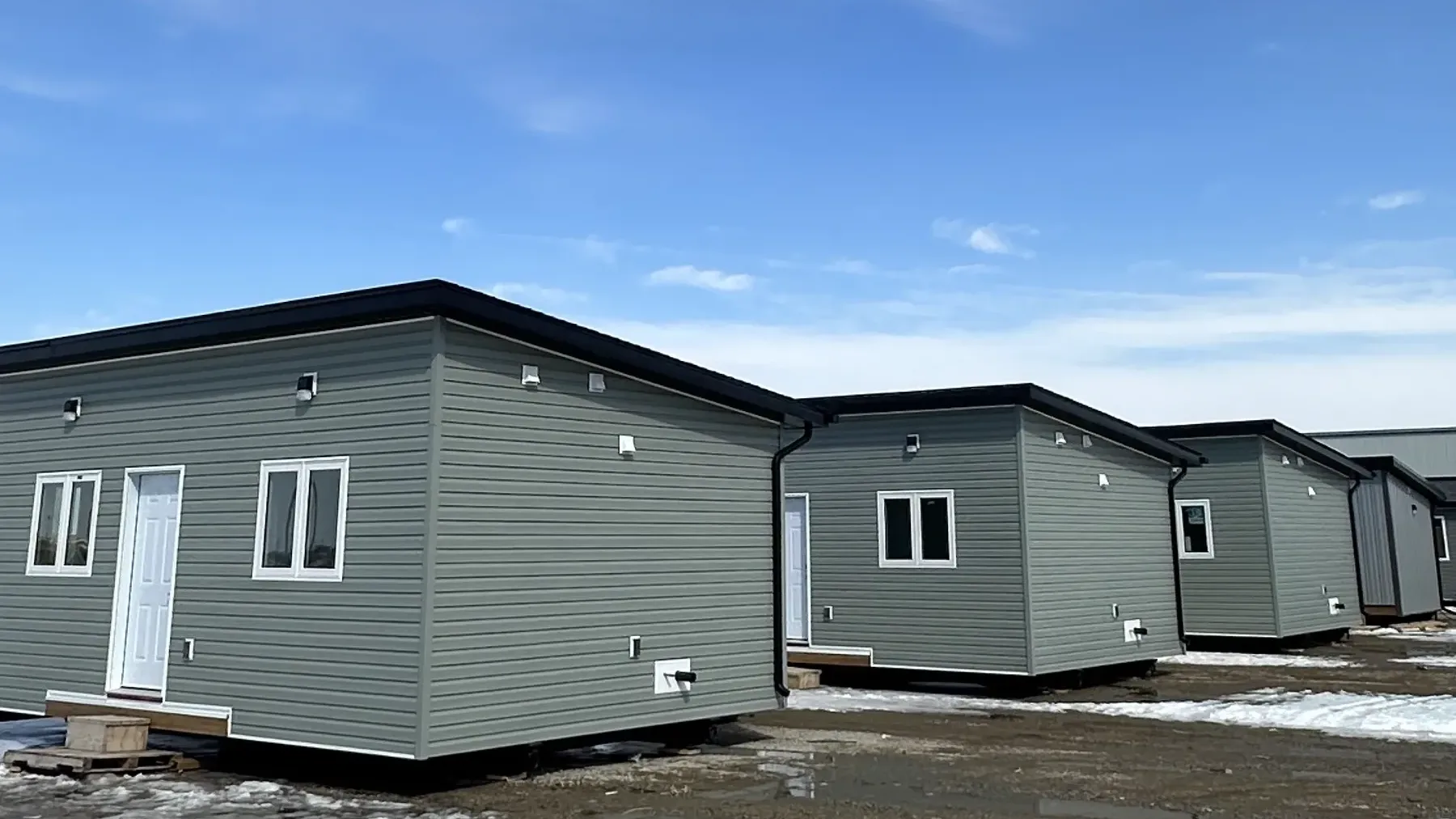
CMHC published a concrete example in May 2026. 605 Studio West, an 84-unit affordable housing building in Calgary, was built and occupied in under a year using modular construction, while a comparable conventionally built project in the same community took nearly two years. Most Herauf builds are manufactured and delivered in roughly 16 weeks, up to 50% faster than conventional construction, and installation takes days. At the Buffalo Lake Métis Settlement, 20 homes built in advance with CMHC and government partners turned an empty plot into a lived-in community within days of installation.
Decisions move to the front of the project
The price of a shorter schedule is earlier decisions. CMHC's review of modular housing projects across Canada advises bringing the whole team together at the beginning and agreeing goals, timelines and responsibilities, because changes become difficult once manufacturing starts. For a developer, that means the layout, the finishes, the mechanical design and the consultants' drawings are settled before the plant schedule is booked, not resolved during construction.
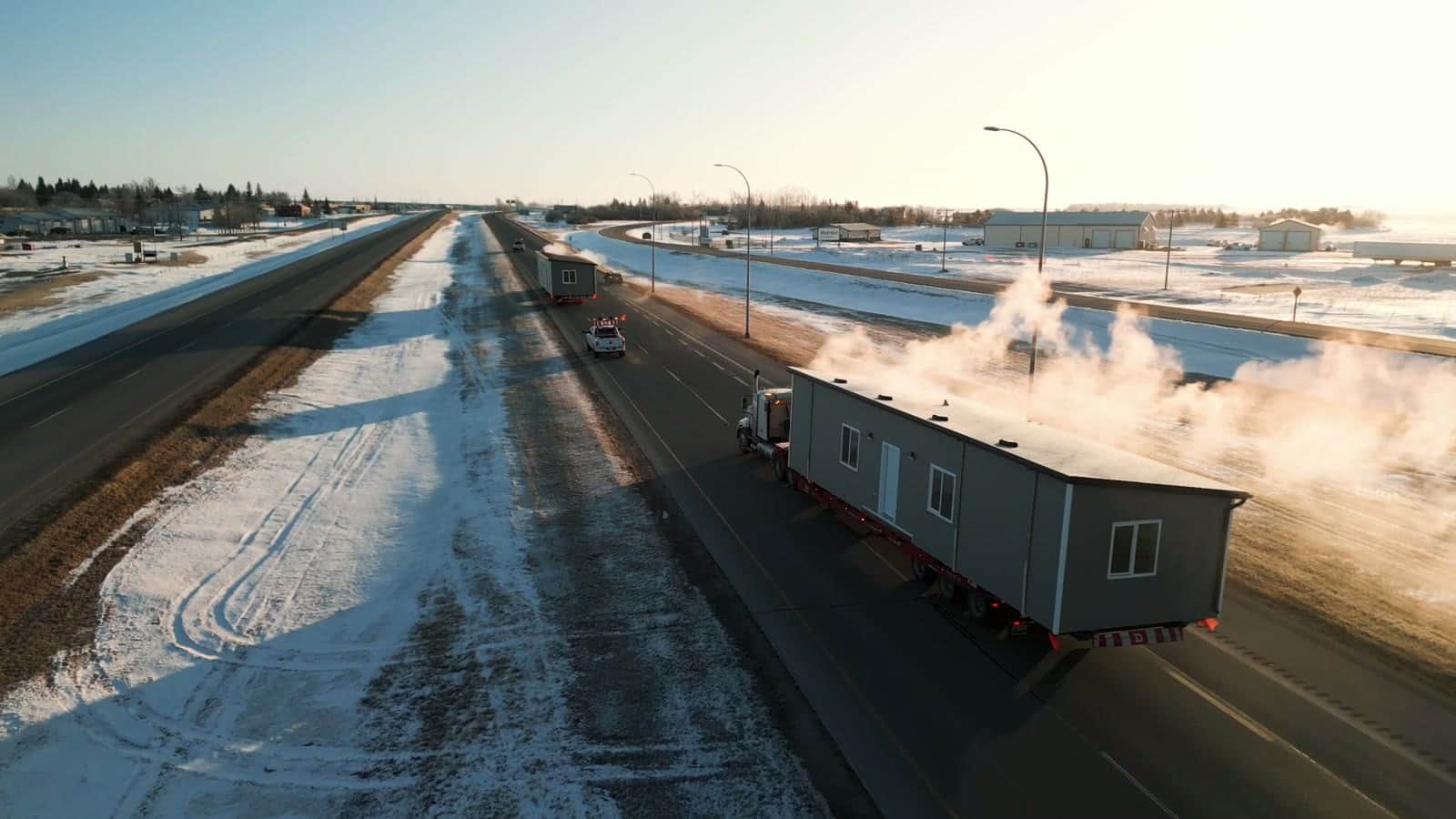
Two more constraints belong in the first meeting. Road widths limit how large a module can be, so the building is planned around sections that can travel. And moisture during transportation and storage can be a serious problem, which means the foundation has to be ready on the delivery date rather than shortly after it.
The upside is a price fixed earlier. Herauf publishes no prices for multi-family or commercial buildings; it quotes each building in writing, usually within one business day, and a fixed scope in the plant leaves fewer open items to turn into change orders. CMHC is clear that modular is not automatically cheaper. It can be more affordable, but not always, depending on whether the factory really saves labour and materials on that project. Underwrite it on its own numbers.
Financing that now fits modular
Three CMHC programs matter to a rental developer:
- Multi-unit mortgage loan insurance. In May 2026, after a pilot that insured more than 800 modular rental homes across five provinces, CMHC extended its multi-unit insurance to modular construction for all its multi-unit products.
- MLI Select. One of those products. It awards points for affordability, energy efficiency and accessibility, needs at least 50 points and at least five units, and at the top tier allows amortization of up to 50 years. For new construction, energy efficiency is measured against the 2020 National Energy Code for Buildings or the 2020 National Building Code, which is where a factory-built, energy-modelled envelope can earn points.
- Apartment Construction Loan Program. Low-cost loans covering what CMHC calls the riskiest phase of development, from construction through to stabilized operations, from $1 million up to 100% of the residential cost, for standard rental, seniors and student housing. CMHC's program page notes that Budget 2024 proposed earmarking at least $500 million of it for apartments built with prefabricated or innovative techniques.
Eligibility and terms are CMHC's to decide and change, so confirm them with CMHC or your lender for your project.
A design you can repeat
The second project is where modular pays back the effort of the first. A building that has been designed, modelled, approved and built once can be built again on the next site without re-engineering it from the start. Herauf's published multi-family building lineup runs from a duplex to a twelve-plex and a 116' × 85' modular complex, and its commercial catalogue includes an office, coffee shop, pharmacy, salon and EV charging station, so many projects start from a proven layout and are adapted rather than drawn from nothing. The planning detail is covered in modular multi-family housing and modular duplexes and triplexes.
Quality you can check before it ships
On a conventional site, the quality of the framing and air sealing depends on the crew and the weather that week. In a plant, the same work is done at a station and inspected before the walls are closed in, and CMHC notes that factory processes can improve air-sealing and quality control while reducing material losses and theft from an open site. Herauf's buildings meet or exceed CSA A277 and the National Building Code for climate zones 6 to 8, which matters both to the building official and to the lender reviewing the file. CMHC also lists tight urban lots among the sites where factory-built buildings install quickly, which suits infill.
One partner from land to handover
Some developers want a manufacturer; others want a partner for the whole project. Herauf Development manages land acquisition and due diligence, permitting and zoning, design coordination, modular construction and turnkey handover, for private developers, investors, institutional partners, municipalities and First Nations. Herauf manufactures in Zehner, Saskatchewan and Enderby, British Columbia, finishes and stages Alberta projects from its St. Paul yard, and has operations planned, not yet open, in Warsaw, Poland and Dallas, Texas.
Before you call
- The site, its zoning and its servicing status.
- The product: unit count and mix, or the commercial use.
- The target occupancy date, and any financing program you are applying to.
- Whether you want a building supplier or a development partner.
Send those through the quote form, email info@heraufmodular.com or call 1.639.382.4106. What drives the price of a commercial building is set out in commercial modular building cost, and the general case for the method is in why choose modular construction.
Sources
- Canada Mortgage and Housing Corporation, CMHC expands mortgage insurance to support prefab and modular construction
- Canada Mortgage and Housing Corporation, MLI Select
- Canada Mortgage and Housing Corporation, Apartment Construction Loan Program
- Canada Mortgage and Housing Corporation, Key lessons on modular housing from across Canada
- Modular Building Institute, What is modular construction?
- Canada Mortgage and Housing Corporation, Manufactured housing: quality at an affordable price
Common questions
Why do developers use modular construction?
Mainly for time. The building is manufactured while the site is prepared, so units can be occupied and earning sooner, which shortens the period a project carries construction interest. CMHC reported that 605 Studio West, an 84-unit modular building in Calgary, was built and occupied in under a year, where a comparable conventional project nearby took nearly two years.
Can a modular rental project use CMHC MLI Select?
Yes. In May 2026 CMHC extended its multi-unit mortgage loan insurance to modular construction for all its multi-unit products, including MLI Select, after a pilot that insured more than 800 modular rental homes in five provinces. MLI Select scores projects on affordability, energy efficiency and accessibility, and needs at least five units.
Is modular always cheaper for a developer?
No. CMHC's review of modular housing projects found modular can be more affordable, but not always; it depends on whether the factory actually saves labour and materials on that project. The more dependable gains are a shorter schedule, a price fixed earlier, and a design that can be repeated on the next site.
What has to be decided earlier on a modular project?
The layout, finishes and mechanical design, because changes become difficult once manufacturing starts. CMHC's advice is to bring the whole team together at the beginning and agree the goals, timelines and responsibilities, and to plan module sizes around what the roads can carry.
A Herauf home on the highway to a development site