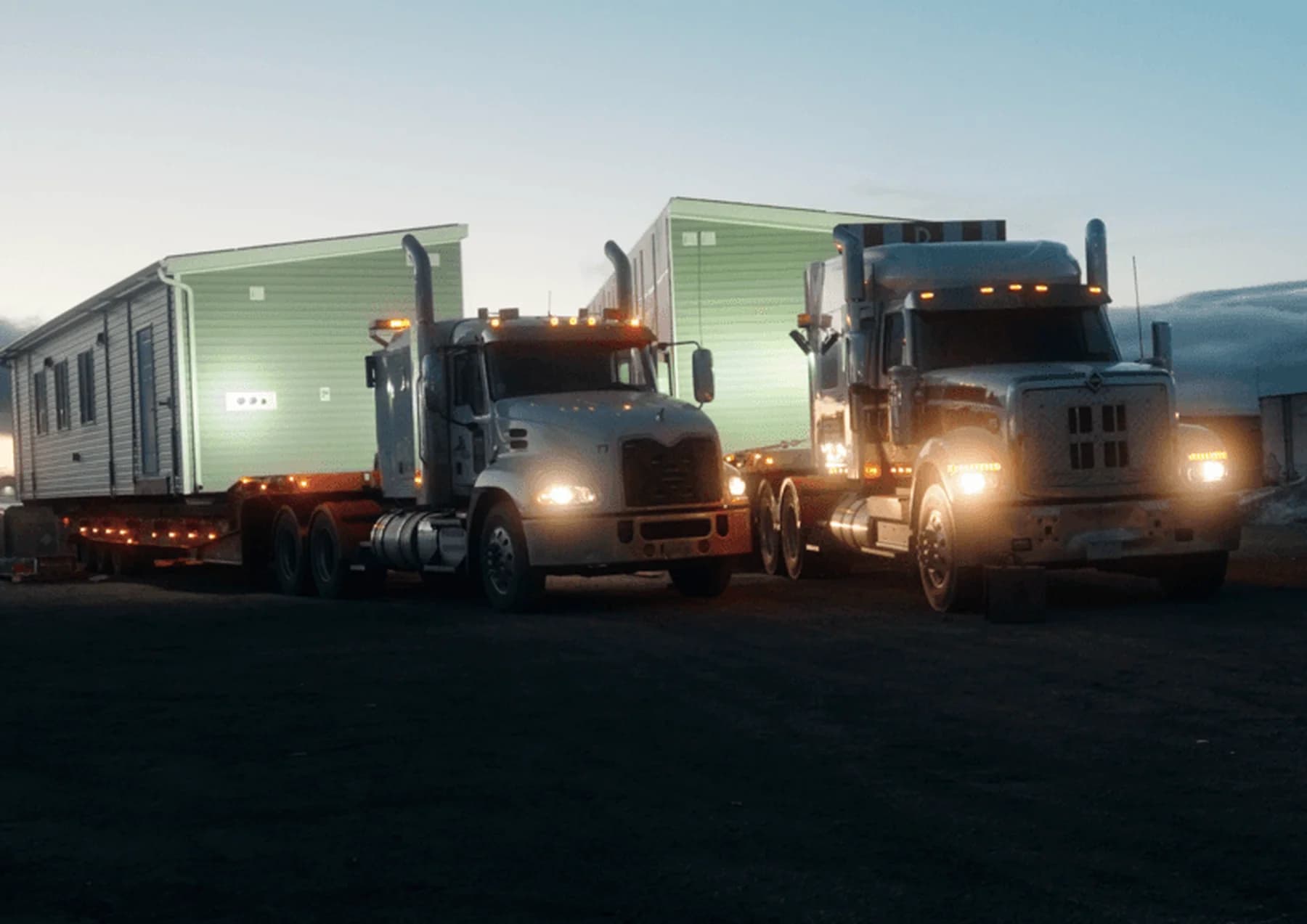
Owners choose modular construction for four reasons: the building is made while the site is prepared, so the schedule is shorter; the work happens indoors, so winter does not stop it; factory conditions make the quality more consistent; and a finished building can be delivered to sites where building conventionally is slow or impractical. It is not the right answer for every project, and the honest version of the case includes when it is not. This overview covers both, with links to the articles that go deeper.
What modular construction is
A modular building is made as finished three-dimensional sections, called modules, in a factory. The modules are trucked to the site, craned onto a prepared foundation and connected. The Modular Building Institute, the industry's trade association, separates two kinds: permanent modular buildings, which use the same materials and codes as conventional construction, and relocatable buildings, which are designed to be moved and reused. Herauf builds both: homes and permanent commercial buildings, and site, camp and emergency buildings on steel skids that can move to the next project.
Modular is not the same as a mobile or manufactured home, which is built to a different standard. The differences are set out in modular vs manufactured vs mobile homes.
1. The schedule runs in parallel
On a conventional build, the site is prepared, then the building goes up on it, one step after the other. On a modular build, the foundation and services are prepared at the same time as the building is made in the plant. The Modular Building Institute says that overlap lets projects finish 30% to 50% sooner. CMHC recently gave a real example: 605 Studio West, an 84-unit affordable housing building in Calgary, was built and occupied in under a year using modular construction, where a comparable conventionally built project in the same community took nearly two years.
Most Herauf builds are manufactured and delivered in roughly 16 weeks, up to 50% faster than conventional construction, and installation on site is measured in days. The details of where the time goes are in how fast is modular construction.
2. Weather comes out of the building schedule
CMHC describes the factory's climate-controlled environment as what lets construction carry on year-round, without the delays and extra costs that extreme weather brings. On the prairies that is the difference between a building season and a building year. Weather still affects the site work and the delivery, but the framing, sealing and finishing happen under a roof. A home ordered in the fall can be built over the winter and set in spring, which is the pattern described on building a modular home in winter.
Winter can even help. Herauf has delivered roughly 1,300 km north over winter ice roads to St. Theresa Point First Nation, a community reachable by ground only when the ice road forms.
3. Consistent quality, inspected before it is closed in
Natural Resources Canada's Green Buildings Strategy says prefabrication, including modular construction, can improve the speed, energy efficiency and consistency of construction. CMHC notes that precise manufacturing equipment and processes can improve air-sealing and overall quality control. The reasons are ordinary: the same crews work at the same stations, materials are stored dry, and the work is inspected before the walls are closed in.
That last point is what CSA A277 is for. British Columbia's building branch describes A277 as a procedure for factory certification rather than a building code: an independent certification agency reviews a plant's quality program and inspects its product, so that a building official at the site can rely on the parts that can no longer be seen. The building still has to meet the code where it is installed. Herauf's buildings meet or exceed CSA A277 and the National Building Code for climate zones 6 to 8, and the standard is explained in CSA A277 explained. Herauf's commercial plans carry a published warranty of 1 year comprehensive, 2 years mechanical and 5 years on the envelope seal.
4. It reaches sites that are hard to build on
CMHC lists quick installation on tight urban lots, environmentally sensitive sites and remote rural areas among the advantages of factory-built housing, and its review of modular projects found particular benefits for remote communities. When the trades, materials and accommodation for a crew are hundreds of kilometres away, finishing the building in a plant and moving it once is often the practical way to build.
Herauf has delivered to a remote bush site with challenging road access for NAIT's Kidney Lake forestry campus (14 dormitory buildings with 56 rooms, 3 classrooms and food storage, ready for a fixed September intake), industrial storage to Yellowknife, and homes over the ice to St. Theresa Point. Northern delivery is covered on northern and remote modular buildings.
When modular is not the right fit
The same CMHC review is candid about the limits, and they are worth knowing before you commit.
- It is not automatically cheaper. CMHC found modular can be more affordable, but not always: it depends on whether the factory genuinely saves labour and materials on the project. Herauf lists starting prices for its home models only; every build is quoted in writing.
- Decisions come early. CMHC's advice is to bring the whole team together at the beginning, because changes become difficult once manufacturing starts. If a design will keep changing late, modular gives up some of its advantage.
- Transport sets the shape. Road widths limit how big a module can be, so a building is planned around sections that can travel. Very large open spans are a structural question to settle early.
- Moisture has to be managed. CMHC found that moisture during transportation and storage can be a serious problem. Modules need protection in transit and a foundation ready when they arrive.
Financing and policy are catching up
Financing is adapting to the way a factory-built building is paid for. In May 2026 CMHC launched Prefab Plus, which lets a buyer purchase a factory-built home with a 5% minimum down payment and receive the mortgage in up to four draws tied to milestones, and extended its multi-unit mortgage insurance to modular construction across all its multi-unit products, including MLI Select. The federal government's Build Canada Homes agency, launched in September 2025, has said it will focus on modern methods such as factory-built and modular construction, starting with 4,000 factory-built homes on federal land. The home buyer's side is in financing a modular home.
Where modular fits
The method suits single homes, multi-unit housing and a wide range of commercial and institutional buildings. Herauf builds homes 14 to 28 feet wide, small homes, luxury homes, and duplex to twelve-plex multi-family layouts, along with offices, washroom and shower buildings, daycares and classrooms, medical buildings and workforce camp buildings. The audience-specific articles go further: for developers, for multi-family housing, for municipalities, and for rural properties. If you are weighing it against a conventional build, read stick build vs modular, and the environmental side is in the environmental advantages of modular construction.
Talk to Herauf
Herauf manufactures at a 60,000 sq ft plant in Zehner, Saskatchewan and a 50,000 sq ft facility in Enderby, British Columbia, finishes and stages Alberta projects from its St. Paul yard, and has delivered across British Columbia, Alberta, Saskatchewan, Manitoba and the Northwest Territories, with offices planned in Poland and Texas. Browse the product lines or the delivered projects, then request a free written quote, usually returned within one business day. You can also email info@heraufmodular.com or call 1.639.382.4106.
Sources
- Modular Building Institute, What is modular construction?
- Government of British Columbia, Building and Safety Standards Branch, Information Bulletin B15-01: Determining compliance of A277-certified buildings
- Canada Mortgage and Housing Corporation, Manufactured housing: quality at an affordable price
- Canada Mortgage and Housing Corporation, Key lessons on modular housing from across Canada
- Canada Mortgage and Housing Corporation, CMHC expands mortgage insurance to support prefab and modular construction
- Natural Resources Canada, The Canada Green Buildings Strategy
- Prime Minister of Canada, Prime Minister Carney launches Build Canada Homes
Common questions
What is modular construction?
Modular construction builds a building as finished three-dimensional sections, called modules, in a factory, then trucks them to the site and sets them on a prepared foundation. Permanent modular buildings use the same materials and building codes as site-built ones; relocatable modular buildings are designed to be moved and reused.
Is modular construction faster?
Usually, because the site and foundation work happen while the building is being made, instead of one after the other. The Modular Building Institute says projects can finish 30% to 50% sooner. Most Herauf builds are manufactured and delivered in roughly 16 weeks, and installation on site is measured in days.
Is modular construction always cheaper?
No. CMHC's review of modular housing projects across Canada found modular can be more affordable, but not always: it depends on whether the factory actually saves labour and materials on that project. The more reliable advantages are a shorter schedule and a price fixed earlier.
Are modular buildings built to the same code as site-built buildings?
Yes. A modular building has to meet the building code where it is installed. CSA A277 is the procedure that lets a building official rely on factory inspection for the parts that are closed in before delivery. Herauf's buildings meet or exceed CSA A277 and the National Building Code for climate zones 6 to 8.
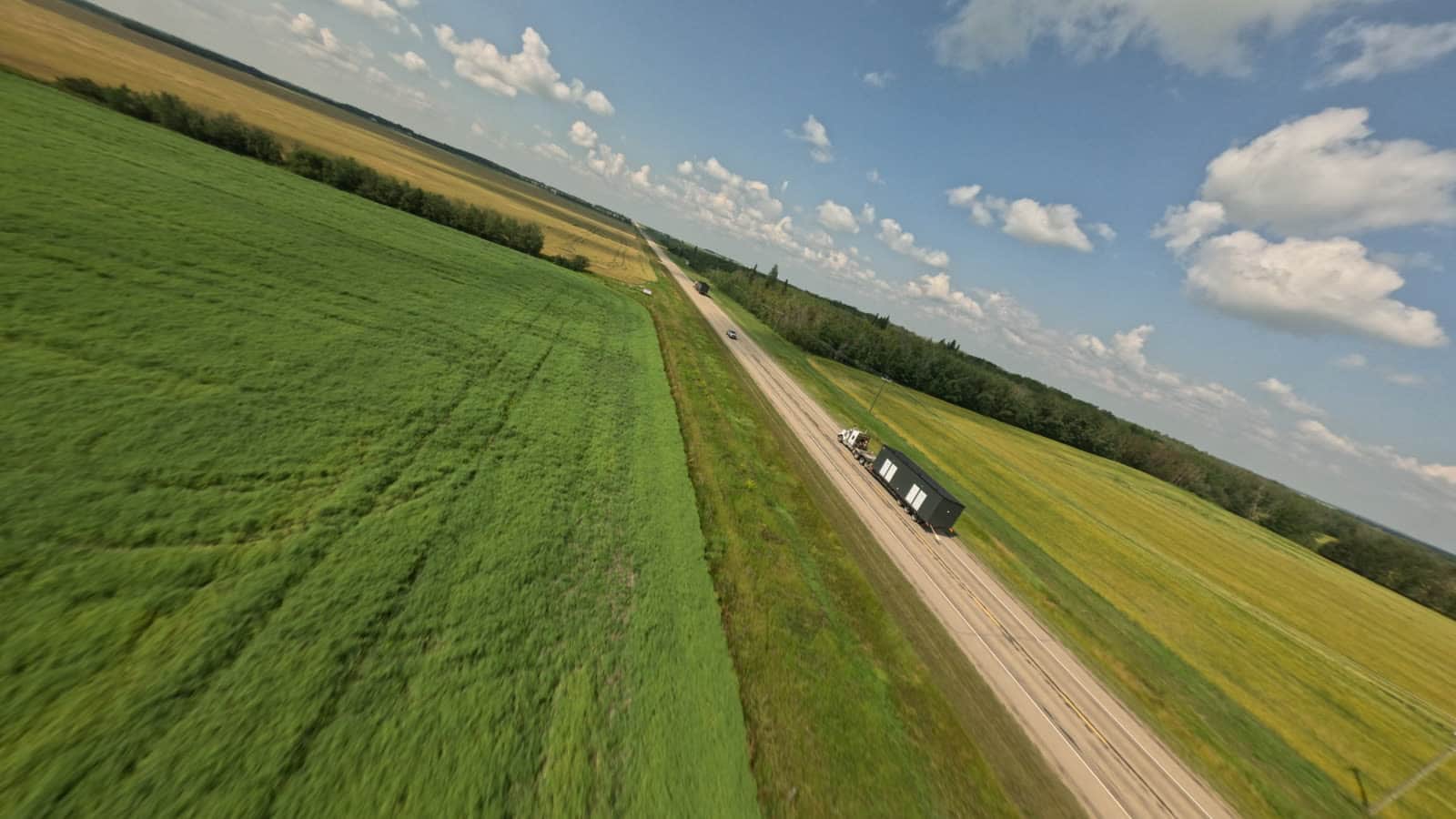
A Herauf module crossing the prairie to its site