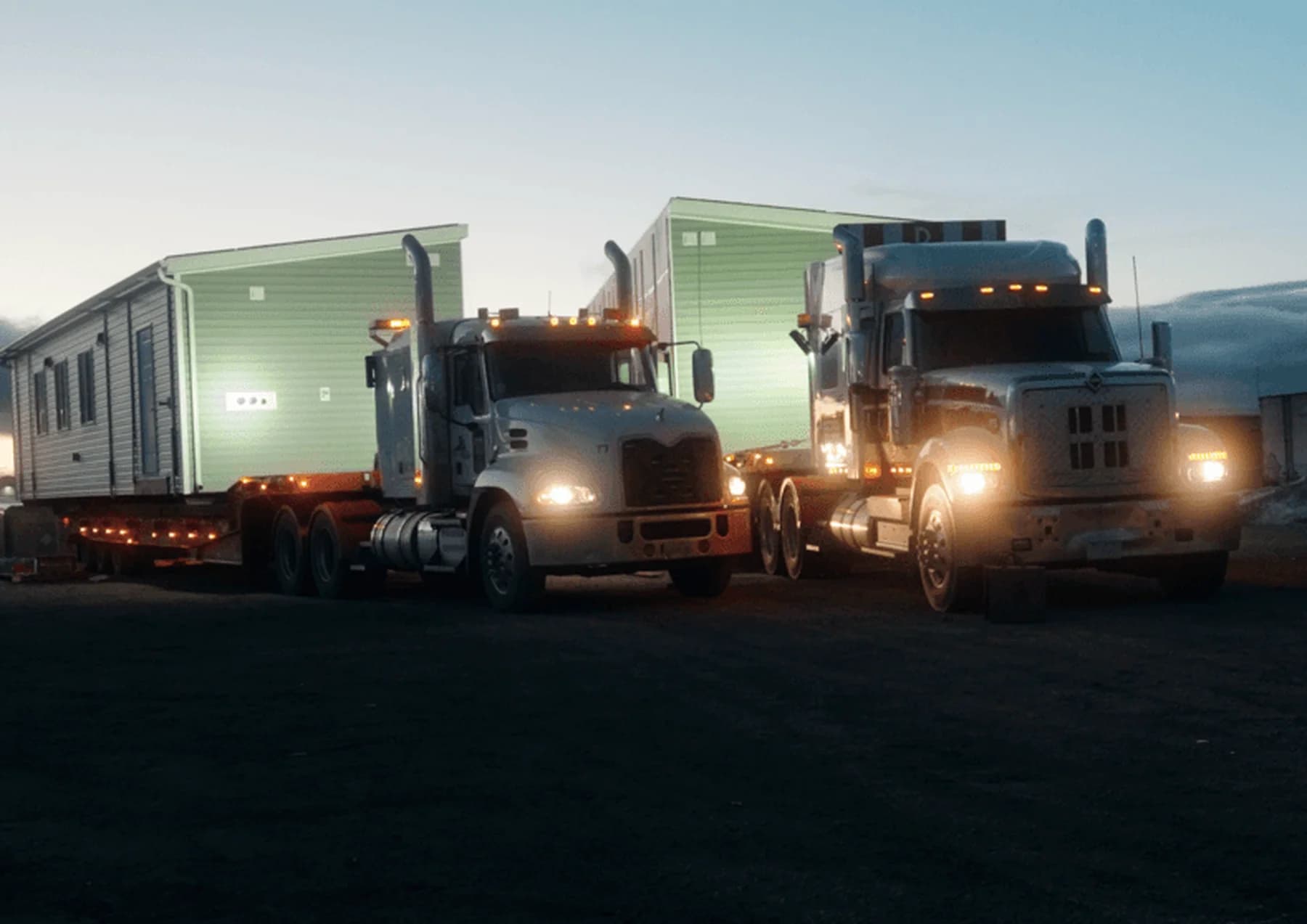
In a wildfire, a building does not have to meet the flames to catch fire. Embers land on the roof, get in through vents and open eaves, and ignite whatever burns next to the walls. That makes the exterior, and the ground right around it, the part of a building that matters most. This article sets out what FireSmart Canada's published guidance says about each part, and which modular exterior options answer it.
One thing first: Herauf's buildings are wood-framed, like most modular buildings in Canada. They are not non-combustible buildings. What can be specified in non-combustible materials is the exterior a fire meets first.
The first 30 metres
FireSmart Canada calls the area within 30 metres of a building the Home Ignition Zone, and splits it into three parts. The Immediate Zone, from the walls out to 1.5 metres, should be a non-combustible area, including any attached structures and decks, with gravel, brick or concrete on the ground. The Intermediate Zone runs from 1.5 to 10 metres, and the Extended Zone from 10 to 30 metres. A modular building arrives finished, so the Immediate Zone belongs in the site plan: decide what goes under the deck and around the skirting before the building lands.
Roof
FireSmart Canada says a Class A fire-rated roof assembly offers the best protection, and lists clay tile, concrete tile, metal and asphalt shingles as examples. Herauf's standard roof is architectural asphalt shingles; a standing-seam metal roof is a published option.
Siding
FireSmart Canada notes that vinyl siding can melt when exposed to high temperatures, and that stucco, brick, fibre cement and concrete offer superior fire resistance. Herauf's standard siding is vinyl; metal siding is a published option, and it is the one to specify in wildfire country.
Vents, eaves, doors and decks
- Vents. FireSmart Canada recommends non-combustible vents with 3 millimetre screening, or ASTM fire-rated vents, so embers cannot get in.
- Eaves. Open eaves are an entry point for embers. Ask for them closed.
- Doors. Herauf's exterior doors are insulated steel as standard.
- Decks. FireSmart Canada suggests non-combustible or fire-rated deck material.
What to ask for
On a quote for a building in a wildfire-prone area, ask for the metal standing-seam roof, metal siding, screened non-combustible vents and closed eaves, and plan a non-combustible strip around the building in the site plan. None of this makes a building fireproof, and FireSmart Canada does not certify or endorse building products, but it removes the easiest ways in for embers.
See wildfire-resilient modular buildings for the exterior package, or send your site through the quote form. For the site itself, use FireSmart Canada's own resources.
Sources
- FireSmart Canada, The Home Ignition Zone
- FireSmart Canada, Construction Guidance
Common questions
Are modular buildings non-combustible?
Most are not. Herauf's buildings, like most modular buildings in Canada, are wood-framed. What can be non-combustible is the exterior a wildfire reaches first: the roof, the siding and the doors, plus the ground in the first 1.5 metres around the building.
What roof is best in wildfire country?
FireSmart Canada says a Class A fire-rated roof assembly offers the best protection, and lists clay tile, concrete tile, metal and asphalt shingles as examples. A standing-seam metal roof is a published Herauf option.
Is vinyl siding a problem in a wildfire area?
FireSmart Canada notes that vinyl siding can melt when exposed to high temperatures, and that stucco, brick, fibre cement and concrete offer better fire resistance. Metal siding is a published Herauf option in place of the standard vinyl.
Is a Herauf building FireSmart certified?
No. FireSmart Canada does not certify or endorse building products. Herauf follows its published guidance when recommending exterior options, and owners should use FireSmart Canada's own resources to assess their site.