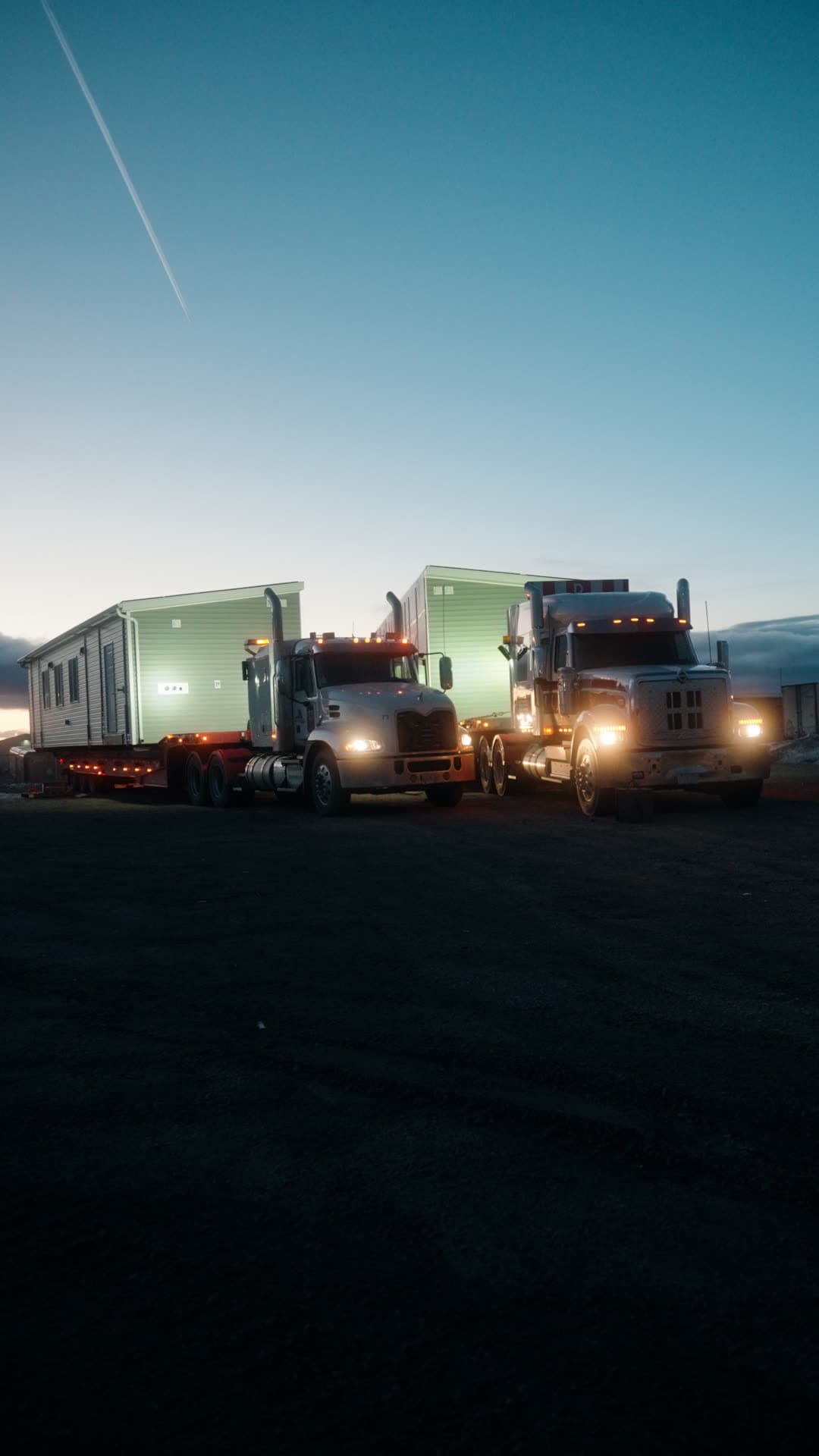
Conventional construction depends on a steady stream of labour, materials, and equipment arriving at the site for months on end. In a remote community, one reachable only by air, or by a winter road that exists for a few weeks a year, that stream simply isn't available. Modular construction inverts the problem: the home is built where the labour and materials already are, then delivered complete. That single shift is what makes housing possible in places others can't reach.
The Remote-Site Problem
Building far from population centres runs into the same obstacles again and again: a short construction season, scarce skilled trades, the cost and difficulty of hauling materials, and weather that can halt an open-air site for weeks. Every one of those compounds the longer a build stays exposed on site.
How Modular Changes the Equation
Because the home is assembled in a controlled facility while site work proceeds in parallel, the on-site phase shrinks dramatically. Modules arrive finished, and installation is measured in days rather than months. The build doesn't wait on local trades, it isn't exposed to the elements for a full season, and the quality is the same as any other unit off the line, including the warm, code-built envelope engineered for climate zones 6 through 8.
Reaching Sites Others Can't
This isn't theoretical. We delivered homes to St. Theresa Point First Nation in northern Manitoba across a seasonal winter ice road, a route open only when the ground and water are frozen hard enough to carry the load. Because the homes were built complete in advance, they could be transported and set within that narrow window. At the Buffalo Lake Métis Settlement, 20 homes turned an empty plot into a lived-in community within days of arriving on site.
On ground like this, foundations matter as much as logistics. Screw piles are often the right answer for remote, frost-prone, or unstable sites, we cover the options in foundations for a modular home.
A Partnership-Led Approach
Delivering housing to a community is about more than logistics. We partner directly with First Nations and Métis communities, and with CMHC and government agencies where applicable, in an approach grounded in ongoing learning about colonial history and decolonization. Signed reference letters from Zagime Anishinabek and St. Theresa Point back that record. You can read more on our Indigenous relations and housing partnerships page.
When Speed Is the Whole Point
The same capabilities that reach a remote community also answer an emergency. When housing is needed fast, after a disaster, or to close an urgent shortfall, modules built in advance can be deployed up to 50% faster than a traditional build. That's the focus of our Rapid Response work.
If your community or organization is planning housing for a remote or hard-to-reach site, request a free quote and we'll walk through what's feasible for your location and season.
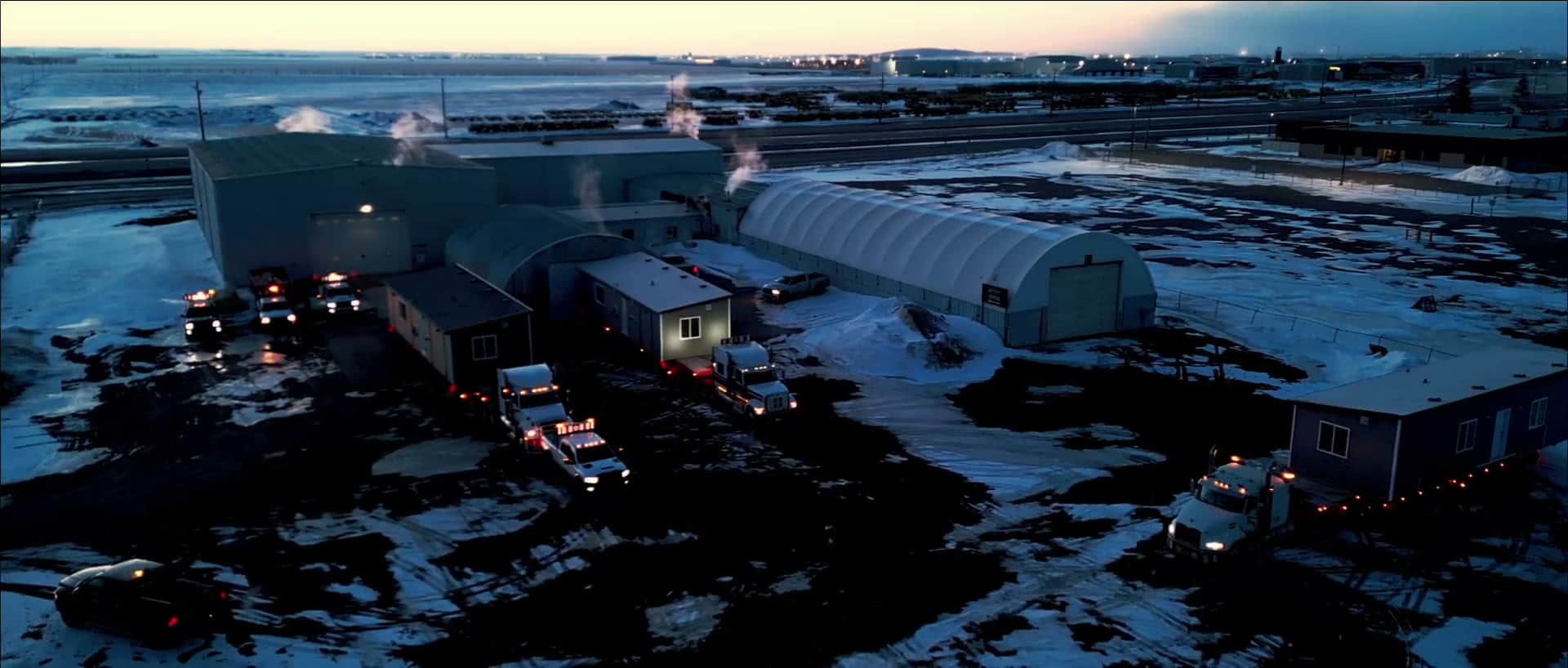
A Herauf home delivered to St. Theresa Point First Nation