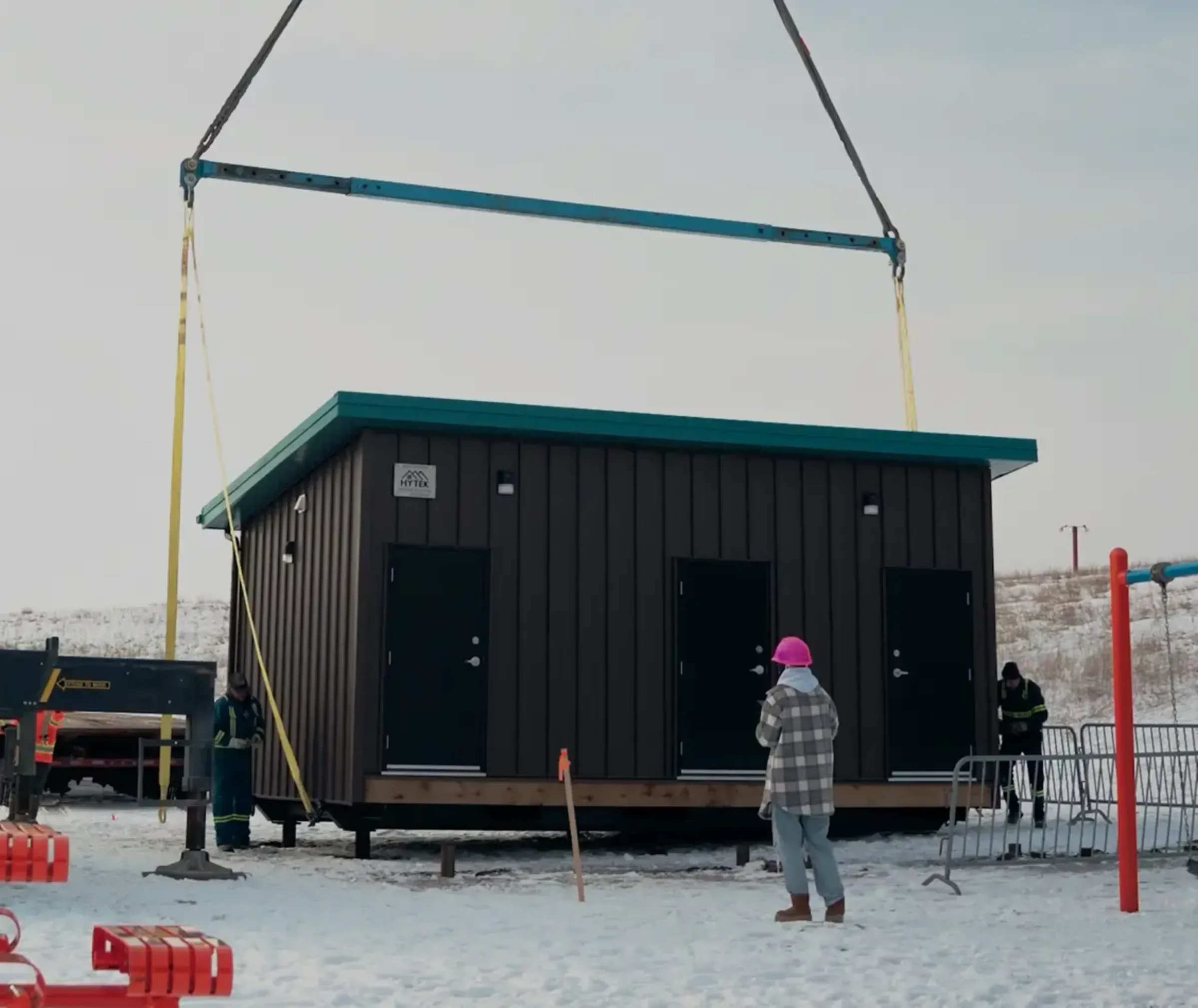
A common myth is that a factory-built home is somehow less substantial than one framed on site. In a Canadian winter, the opposite tends to be true. The controlled environment of a facility is exactly what produces a tight, consistent building envelope, and the envelope is what keeps the cold out. Here's how a modular home is built to handle climate zones 6 through 8.
The Envelope Is Engineered, Not Estimated
Every unit we build is engineered to the National Building Code for climate zones 6 through 8, with a measured, modelled envelope:
- A continuously insulated shell, deep, unbroken insulation overhead and underfoot, where the most heat is lost.
- Triple-pane low-E windows, three sealed panes with a low-emissivity coating that reflects heat back inside while still letting daylight in.
- An airtight, Tyvek-wrapped envelope, assembled indoors to a tight, repeatable standard that a crew can rarely match outdoors in winter.
- A heat-recovery ventilator (HRV), keeps the air fresh without throwing away the heat you've paid for.
That envelope is independently energy-modelled in Hot2000 to confirm §9.36 compliance for Canadian climate zones, it's a specification, not a hope.
Why Factory Building Produces a Tighter Home
Air leakage is the quiet enemy of a warm house. Every gap in the envelope is a place where heated air escapes and cold air sneaks in. Building indoors removes the biggest sources of inconsistency: materials never sit in rain or snow, insulation is installed to spec under stable conditions, and every assembly is inspected before it leaves the floor. The result is a more airtight, more repeatable envelope than a crew can typically achieve outdoors in shoulder-season weather.
Foundations and Frost
Warmth starts below grade. Foundations are designed to extend below the local frost line, and in the coldest zones that depth often favours a full basement or a frost-protected design. If your site has challenging soil or sits in deep-frost country, screw piles are another path, we cover the full range in foundations for a modular home.
Built and Warrantied for the Cold
Performance you can't verify isn't performance. Every residential prototype is independently energy-modelled in Hot2000 to confirm its §9.36 rating before it's built, and every unit is backed by a comprehensive structural and workmanship warranty that stands behind the airtight, insulated shell that carries you through January.
This is the same envelope that lets us deliver homes to some of the coldest, most remote places in the country, from northern Alberta to Saskatchewan. To see the specifications for your region, request a free quote and we'll share the energy model for your build.
Common questions
Are modular homes warm enough for Canadian winters?
Every Herauf unit is engineered to the National Building Code for climate zones 6 through 8, with a continuously insulated shell, triple-pane low-E windows, an airtight Tyvek-wrapped envelope, and a heat-recovery ventilator. That envelope is independently energy-modelled in Hot2000 to confirm Section 9.36 compliance for Canadian climate zones.
Is a factory-built home less substantial than one framed on site?
In a Canadian winter the opposite tends to be true. Building indoors means materials never sit in rain or snow, insulation is installed to spec under stable conditions, and every assembly is inspected before it leaves the floor, producing a more airtight and more repeatable envelope than a crew can typically achieve outdoors.
How deep does a foundation need to go in a cold climate?
Foundations are designed to extend below the local frost line, and in the coldest zones that depth often favours a full basement or a frost-protected design. If your site has challenging soil or sits in deep-frost country, screw piles are another path.
Is the energy performance of a modular home verified?
Yes. Every residential prototype is independently energy-modelled in Hot2000 to confirm its Section 9.36 rating before it is built, and every unit is backed by a comprehensive structural and workmanship warranty.
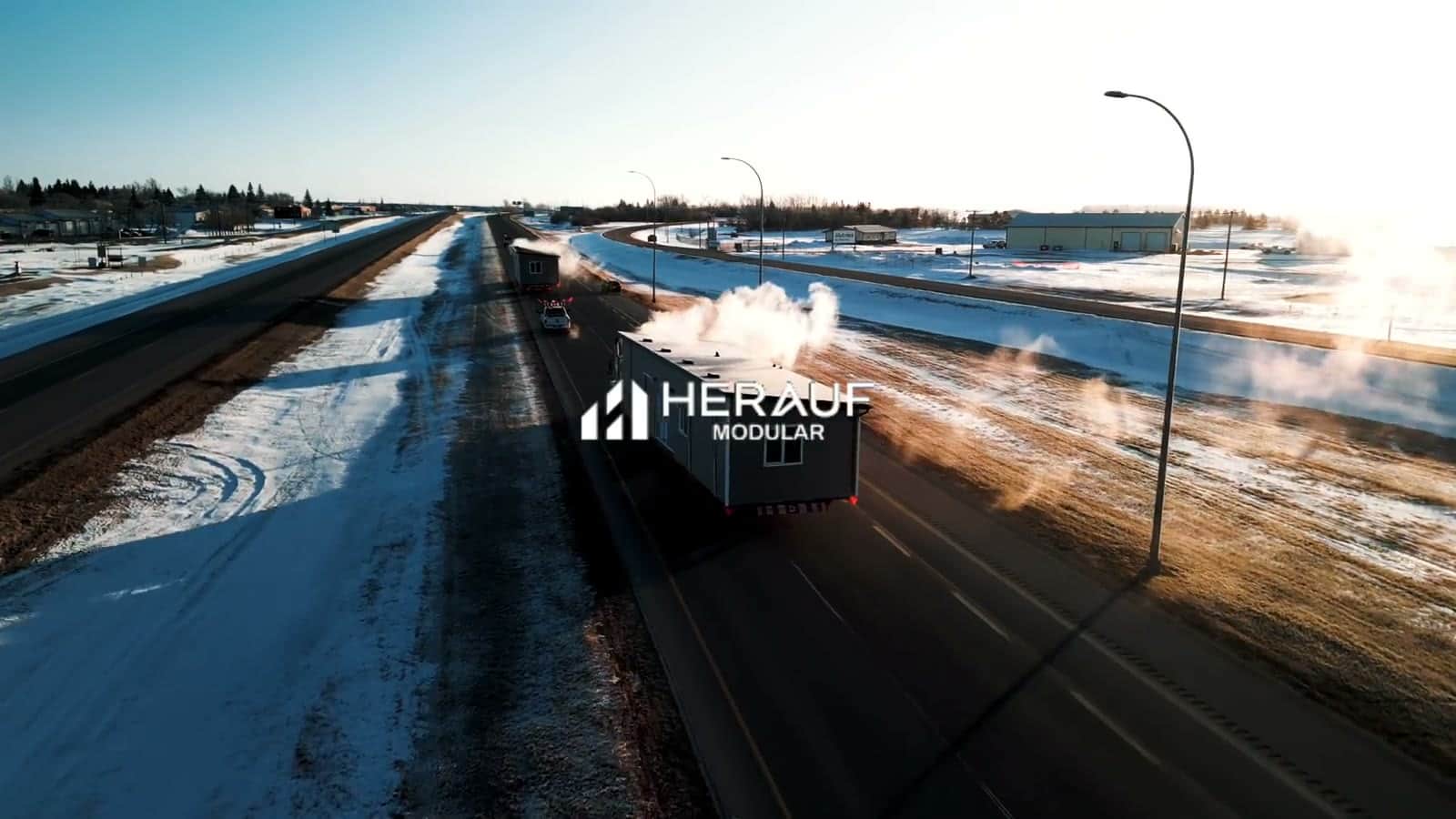
A Herauf home delivered over a winter road