Most community buildings on reserve are funded through federal programs the First Nation applies to directly: Indigenous Services Canada's Capital Facilities and Maintenance Program for community infrastructure, and CMHC programs such as Section 95 for housing. Health buildings and child and family services buildings have their own capital routes. This is a general guide to where each kind of building is usually funded. Program rules change, so confirm the details with the program itself.
Herauf does not administer any of these programs, does not apply on a community's behalf and cannot promise that a project is eligible. The buildings themselves, and the communities already served, are on the community buildings for First Nations and Métis communities page.
What is the Capital Facilities and Maintenance Program?
Indigenous Services Canada describes the Capital Facilities and Maintenance Program as the Government of Canada's main vehicle to support community infrastructure for First Nations on reserves. Its funding, more than $2 billion a year, goes to housing, education facilities, water and wastewater systems, and other community infrastructure such as roads and bridges, fire protection, and cultural and recreational facilities.
There is no single application form. The program's funding is managed through First Nation infrastructure investment plans, built with the community around the needs it identifies.
What is a First Nations Infrastructure Investment Plan?
It is the planning document through which Indigenous Services Canada assesses a First Nation's infrastructure needs and manages capital funding. ISC is clear that the plan is a planning tool, not a funding program. The deadline to submit it to the ISC regional office is October 15 of each year, so a building the community wants funded should be in the plan, with a cost, before then.
How are schools and education buildings funded?
Through the same program. ISC works with First Nations through the Capital Facilities and Maintenance Program on education facilities, which it lists as school facilities such as classrooms, gyms, science labs, sports fields, and home economics and shop facilities. Funding is determined from the information in the infrastructure investment plan, which is one more reason to get projects into it early. Herauf's classroom and daycare buildings are on the daycare and school buildings page.
Which program funds health buildings and staff residences?
Indigenous Services Canada's Health Facilities Program. It funds the planning, construction, expansion, renovation, maintenance and management of community health facilities, and names four kinds of building: health services buildings, addictions treatment centres, Aboriginal Head Start on Reserve spaces, and residences for healthcare professionals.
ISC separates minor capital (repairs and renovations) from major capital: planning, design and construction to build new, expand or significantly renovate a facility, generally where the project costs $1 million or more. First Nations and Inuit communities and related organizations in health service delivery may be eligible. There is no fixed deadline; the starting point is the First Nations and Inuit health regional office. The published clinic layouts are described in modular medical clinics and pharmacies.
How are child and family services buildings funded?
Under the Canadian Human Rights Tribunal order 2021 CHRT 41, Canada funds the purchase and construction of capital assets for delivering First Nations child and family services and services approved under Jordan's Principle. ISC's examples include buying land for a building, repairing or renovating a building, and creating a cultural space for prevention programming.
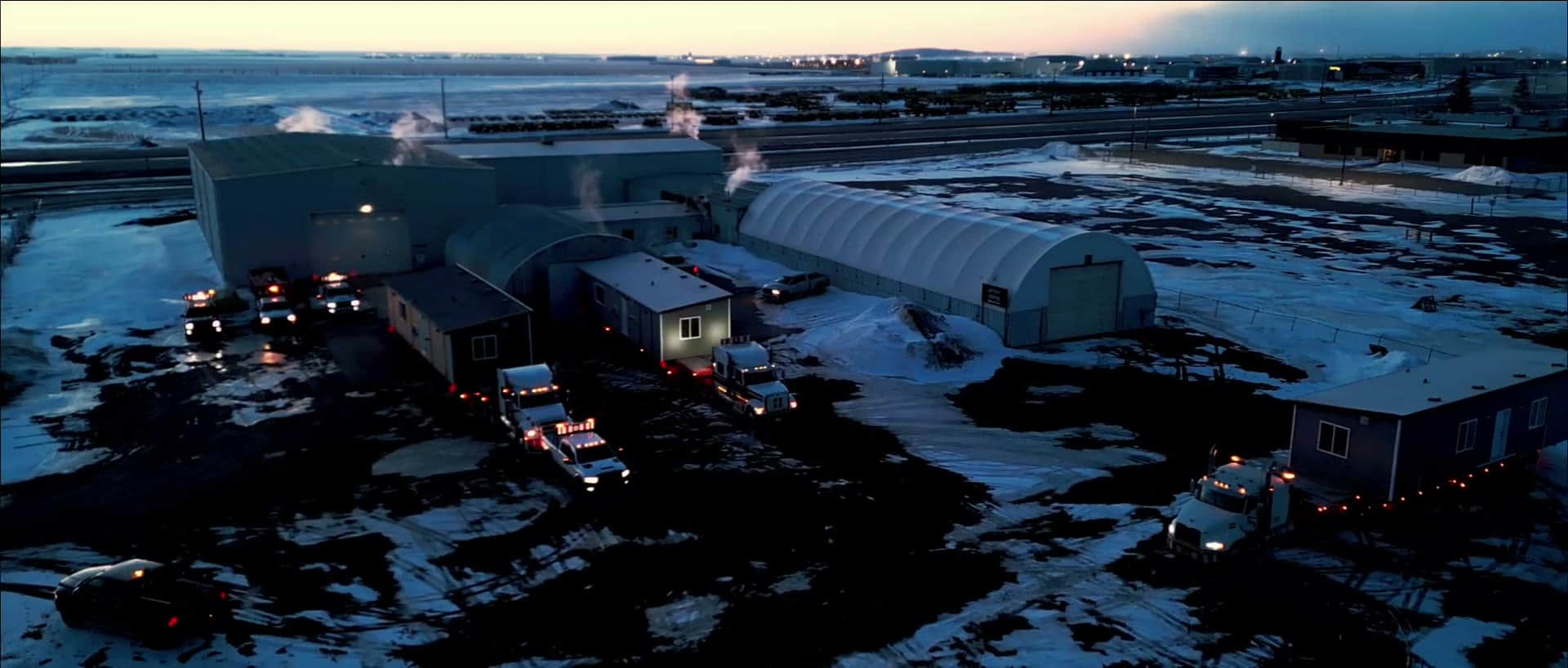
A request has to be ready to proceed, which ISC defines as approved by the First Nation, with the feasibility and design work complete. ISC aims to make a determination within 30 business days. Because the design has to be done first, a builder's layout and quote are usually part of getting a request ready. Herauf built the St. Theresa Point child and family services office and a child and family services building delivered to St. Theresa Point First Nation over the winter ice road.
What is CMHC Section 95?
CMHC's On-Reserve Non-Profit Housing Program, known as Section 95, provides subsidies and loans to build, buy, renovate and manage non-profit rental housing in First Nation communities. All First Nation communities are eligible. Through CMHC Direct Lending, a loan can cover up to 100% of a project's eligible capital cost, and the housing subsidy runs for up to 25 years or the loan's amortization, whichever is shorter.
CMHC also offers proposal development funding, an interest-free repayable loan to help get an on-reserve housing project ready, and asks for a Section 95 Certificate of Building Code Compliance form. The contact is CMHC's Indigenous and Northern Housing Solutions Specialist.
Can band members finance their own homes on reserve?
Yes, through CMHC's Insured Loans for On-Reserve First Nation Housing. CMHC insures loans made by approved lenders, which can be banks, credit unions or Aboriginal Capital Corporations, to build, buy or renovate a single-family home or a multi-unit rental. The loans are secured by a council resolution and a ministerial loan guarantee from Indigenous Services Canada, and the borrower needs a certificate of possession or land-use authorization from the First Nation.
What about Métis, Inuit and off-reserve projects?
Most of the programs above are written for First Nations on reserve. CMHC gathers its funding for First Nations, Inuit and Métis housing, on and off reserve, on one Indigenous funding page covering new construction, repair and skills training, which is the place to start for a Métis settlement or an Inuit community. Not every program stays open: CMHC's Indigenous Shelter and Transitional Housing Initiative, for example, has fully committed its budget and is closed. Check that a program is accepting applications before building a plan around it.
Where does the builder fit in?
Every route above asks the community to show what it will build, what it will cost and when. That is the builder's part: a written quote, the layout, and a delivery schedule that works for the site, including the winter-road window for a fly-in community. Herauf comes back with a written quote, usually within one business day.
Separate from any government program, Herauf's own $15,000 Infrastructure Grant goes toward eligible new modular builds, and First Nations projects qualify. How Herauf works with Nations is on the Indigenous relations page, and the practical side of housing is in modular housing for First Nations communities.
How to start
Send the building type, the community and how it is reached through the quote form, or call 1.639.382.4106. A quote in hand before the October 15 infrastructure plan deadline, or before a Section 95 proposal, is the practical first step.
Sources
- Indigenous Services Canada, Capital Facilities and Maintenance Program
- Indigenous Services Canada, First Nations Infrastructure Investment Plan
- Indigenous Services Canada, Education infrastructure on reserve
- Indigenous Services Canada, Health Facilities Program
- Indigenous Services Canada, Capital assets for First Nations child and family services and Jordan's Principle
- Canada Mortgage and Housing Corporation, On-Reserve Non-Profit Housing Program (Section 95)
- Canada Mortgage and Housing Corporation, Insured loans for on-reserve First Nation housing
- Canada Mortgage and Housing Corporation, Indigenous funding
- Canada Mortgage and Housing Corporation, Shelter and Transitional Housing Initiative for Indigenous peoples
Common questions
What federal program funds community buildings on reserve?
Indigenous Services Canada's Capital Facilities and Maintenance Program is the Government of Canada's main vehicle for community infrastructure for First Nations on reserves. It invests in housing, education facilities, water and wastewater systems and other community infrastructure, and its funding is managed through each First Nation's infrastructure investment plan.
What is CMHC Section 95?
CMHC's On-Reserve Non-Profit Housing Program, known as Section 95, provides subsidies and loans to build, buy, renovate and manage non-profit rental housing in First Nation communities. All First Nation communities are eligible, and CMHC Direct Lending can finance up to 100% of a project's eligible capital cost.
Is there federal funding for health centres and staff housing on reserve?
Indigenous Services Canada's Health Facilities Program funds health services buildings, addictions treatment centres, Aboriginal Head Start on Reserve spaces and residences for healthcare professionals. First Nations and Inuit communities and related organizations may be eligible, and applications go through the First Nations and Inuit health regional office.
Does a modular builder apply for funding for the community?
No. The community or its organization applies, and the program decides eligibility. Herauf does not administer funding or guarantee eligibility. What a builder can supply is the quote, the layouts and the delivery schedule an application usually has to show.
A Herauf winter convoy delivering to St. Theresa Point First Nation