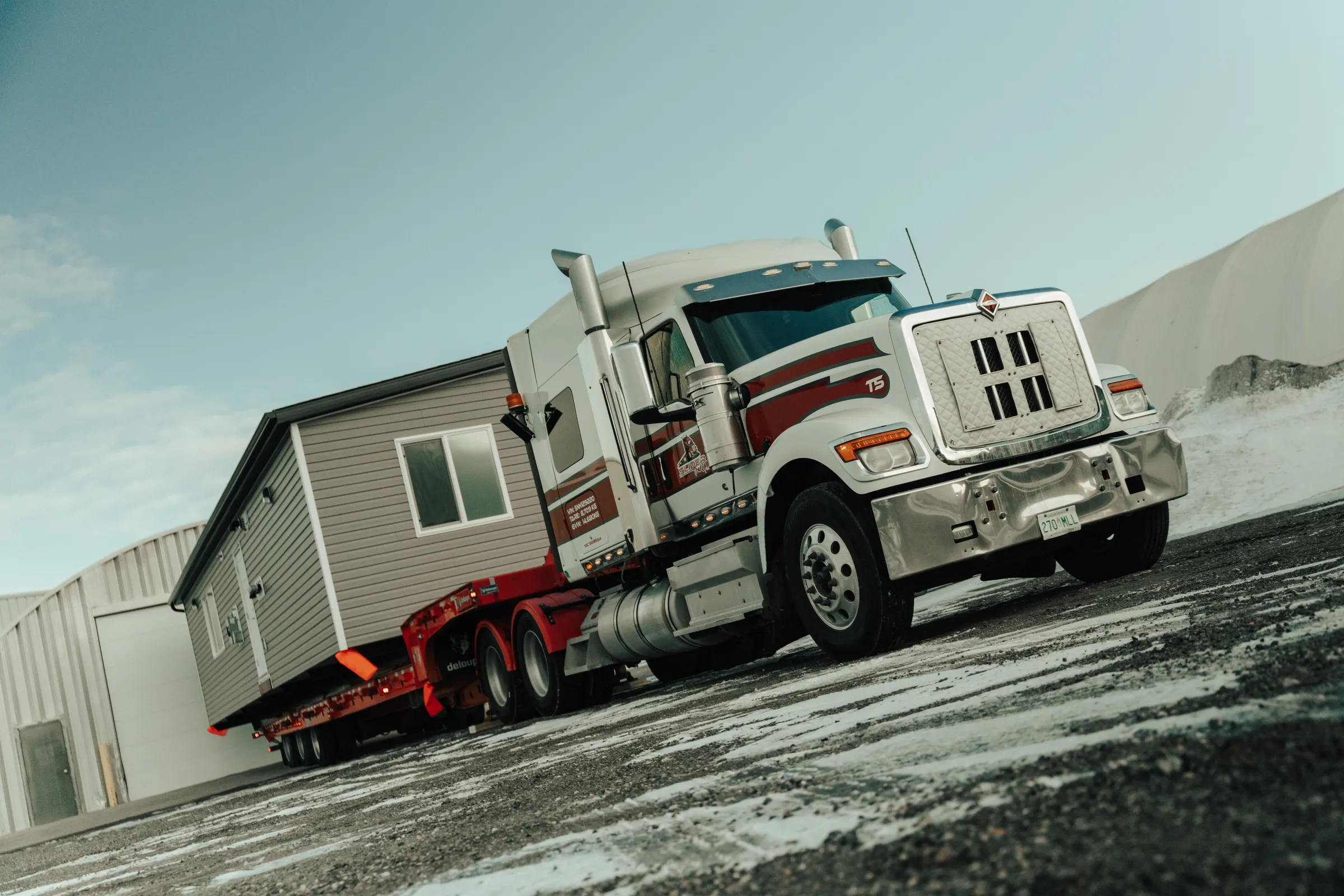
Modular Indigenous housing is housing for First Nations and Métis communities built as finished sections inside a factory, inspected at every stage, then delivered and set on site. The build runs indoors on its own schedule, so a community that can only be reached for a few weeks a year still gets homes that meet or exceed CSA A277 and the National Building Code for climate zones 6 to 8.
How Herauf works with Nations, and the signed reference letters from Zagime Anishinabek and St. Theresa Point, are on the Indigenous relations page. This article covers the practical side: how the homes get built, how they get there, and what has already been delivered.
Why build a community's homes in a factory?
Because the hardest part of northern and remote housing is usually not the house. It is getting materials, trades and inspectors to the site in the months the weather allows. Building indoors takes the season out of the schedule: framing, wiring, plumbing and finishing happen in the plant, and every stage is inspected before the walls close. The community sees the crew for days of installation instead of a construction season, and the work behind the walls has already been checked.
Site work runs at the same time. While the homes are being built, the foundations or pads, water and power are prepared on site, which is why most builds are manufactured and delivered in about 16 weeks.
How do homes reach a fly-in community?
By planning the build around the access window rather than the other way round. St. Theresa Point First Nation in northern Manitoba is reachable by ground only when the winter ice roads form. Herauf built through the off-season and timed delivery to that window: first a child and family services building, then in March 2026 a convoy carrying three youth transitional homes roughly 700 km north over the ice. Eagle Feather News covered the delivery.
The same approach took youth housing to a northern Manitoba community over winter ice roads. The longer story of remote delivery is in modular housing for remote communities.
Does every home need a poured foundation?
No. For Nisichawayasihk Cree Nation, homes were built on the Herauf rapid portable skid system. The steel skid carries the home from the plant floor to the site and stays under it, so the build does not wait on a foundation season, and the unit can be relocated if the community's needs change. Where a permanent foundation is the right answer, the home sets on one instead. Homes can also be specified with self-contained water and sewer for sites without services.
What kinds of buildings can a community order?
More than single-family homes. The published range includes:
- Family homes in widths from 14 ft to 28 ft, in the residential catalogue.
- Small homes from 192 sq ft to 432 sq ft, in the small homes range.
- A modular complex at 116' × 85', with eight suites plus cafeteria, recreation and reception space, designed for senior living and youth transition housing, in the multi-family lineup.
- Community buildings such as offices, washrooms and classrooms, from the commercial range.
Which communities has Herauf built for?
- St. Theresa Point First Nation, Manitoba: a child and family services building and three youth transitional homes, delivered over the winter ice road.
- St. Theresa Point child and family services office, Winnipeg: manufactured off-site and delivered complete.
- Nisichawayasihk Cree Nation, Manitoba: northern housing on the rapid portable skid system.
- Zagime Anishinabek, Saskatchewan: seven modular projects, commercial and residential, delivered in partnership across southern Saskatchewan First Nations.
- Buffalo Lake Métis Settlement, Alberta: 20 homes built with CMHC and government partners while the site was prepared, turning an empty plot into a lived-in community within days.
How to start a conversation
Send the number and type of homes, the community and how it is reached through the quote form, or call 1.639.382.4106. Herauf confirms access before anything is committed and comes back with a written quote, usually within one business day.
Common questions
What is modular Indigenous housing?
Homes for First Nations and Métis communities that are built as finished sections inside a factory, inspected at every stage, then delivered and set on site. Because the build does not depend on the local construction season, it suits communities where materials, trades and road access are limited for most of the year.
Can modular homes reach a fly-in First Nation?
Yes, when the delivery is planned around the access window. Herauf built homes for St. Theresa Point First Nation through the off-season and delivered them roughly 700 km north over the winter ice road, most recently three youth transitional homes in March 2026.
Do the homes need a poured foundation?
Not always. On the Herauf skid system the steel skid carries the home from the plant floor to the site and stays under it, so the build does not wait on a foundation season and the home can be relocated later. Permanent foundations are also available.
What can be built besides single homes?
Youth transitional homes, small homes from 192 sq ft, family homes in widths from 14 ft to 28 ft, child and family services offices, and a 116' × 85' modular complex with eight suites plus cafeteria, recreation and reception space for senior living or youth transition housing.
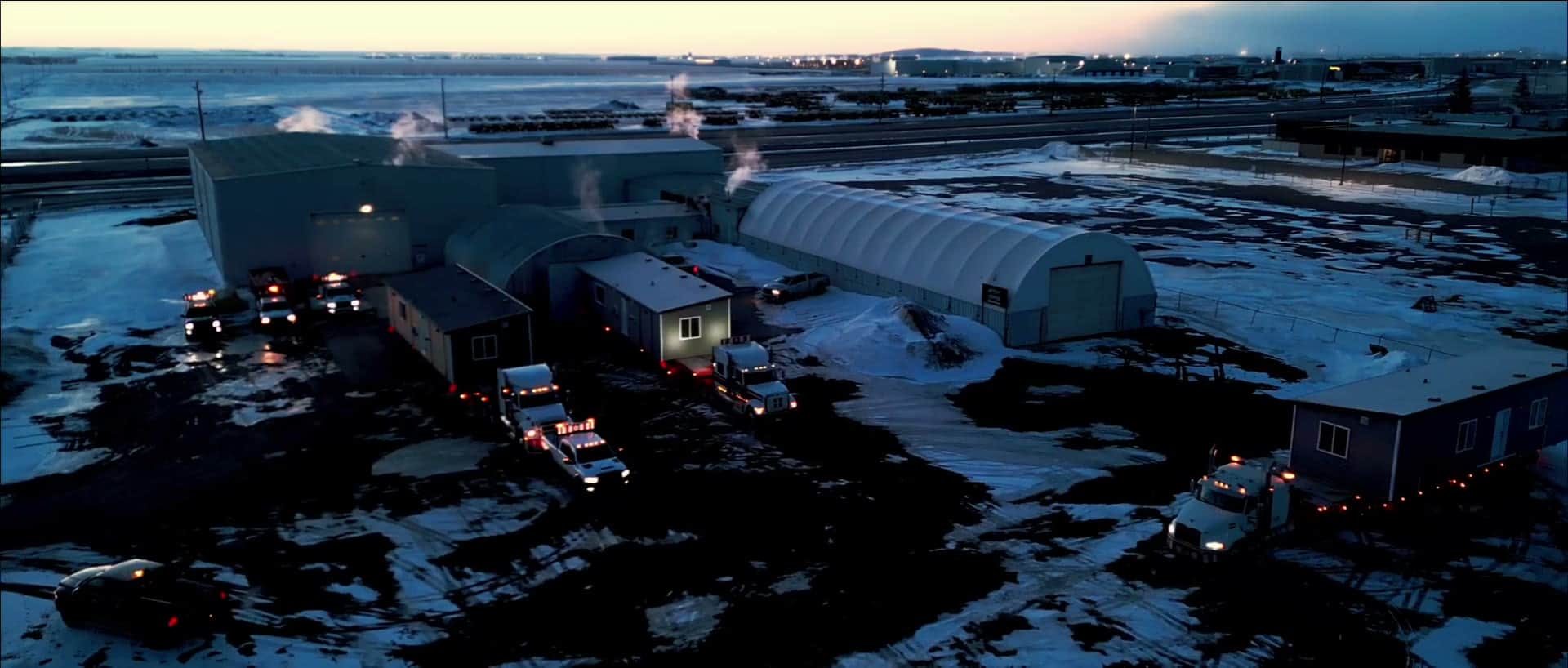
A Herauf home delivered to St. Theresa Point First Nation