A prefab emergency shelter, as Herauf builds it, is a finished, code-built home on a steel skid, delivered whole to an evacuation or flood site and set in days. It is a real home, not a tent: framed, wired, plumbed, heated and finished indoors before it travels, and built to the same National Building Code as a house that will stand for fifty years.
The commercial page for this is Herauf Rapid Response, which covers deployment and the request process. If the need is longer-term housing on a permanent foundation, the northern and remote buildings page is the one. The rest of this article is what a unit includes.
What arrives on the truck
A complete home: exterior cladding and roofing, insulated and airtight walls, windows and doors, a finished interior, a kitchen and bathroom, and electric heat. Plumbing, electrical and HVAC are self-contained inside the unit, so the only site work is a level pad and the service connections. Solar is optional where the grid is unreliable.
The skid under it
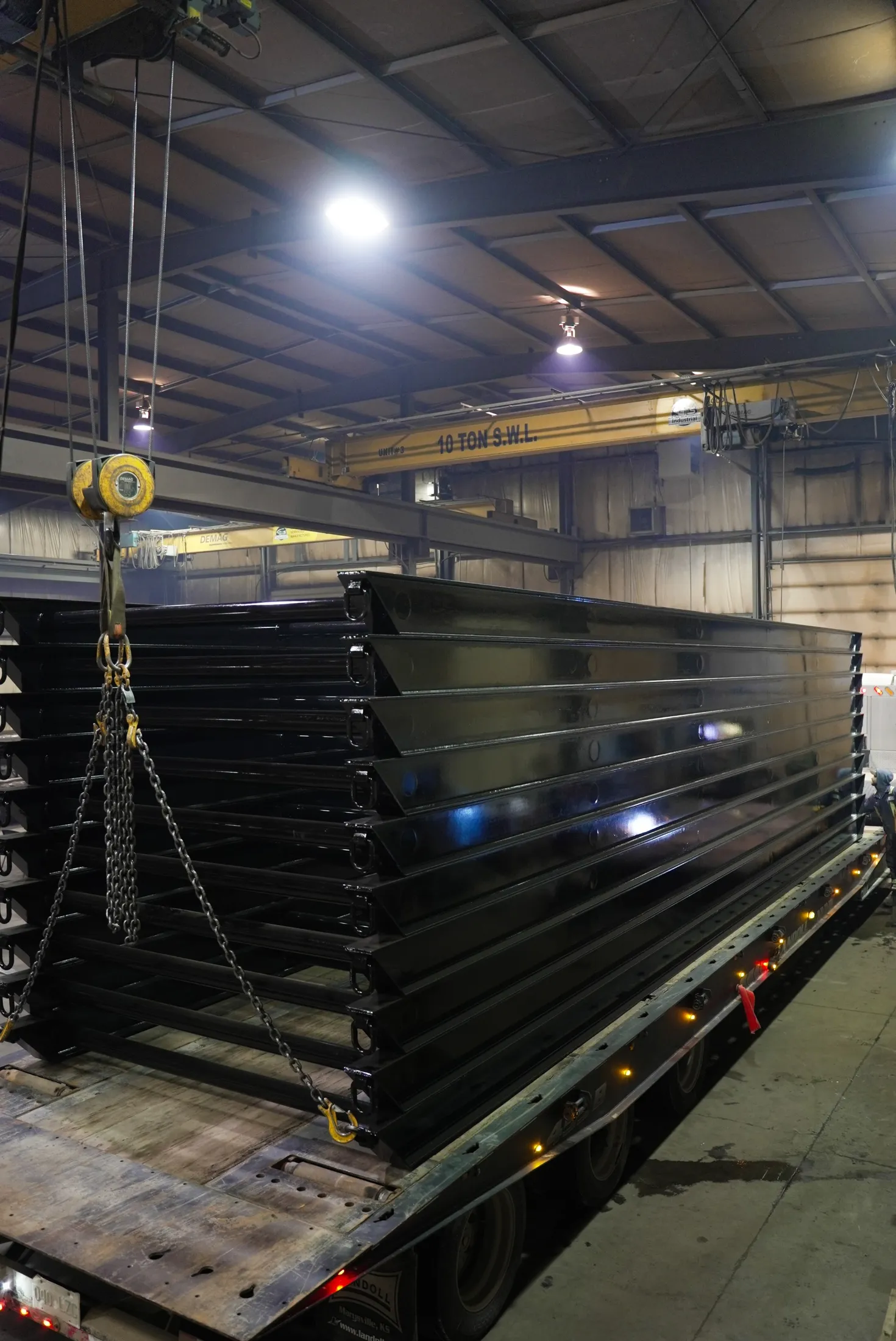
The steel skid is welded in Herauf's own shop. The home travels on it, sets down on it, and can be lifted off again years later, so there is no poured foundation to wait on and nothing left behind when the unit moves. That is what makes the same building work for a flood evacuation in spring and a housing shortfall the following winter.
Days, not seasons
Because the unit is finished before it leaves the plant, the site is occupied for days rather than a build season. The home sets down on prepared ground, is connected to power, water and sewer, and is inspected. A site-built replacement home would still be waiting on a foundation.
Where it can go
By highway across the prairies, by winter road and ice road when the ground is frozen, and to fly-in sites. Herauf has delivered finished homes roughly 700 km over winter ice roads to St. Theresa Point First Nation in northern Manitoba; the community's own account is in a signed reference letter.
Who it is for
Communities and agencies responding to evacuations, floods and fires, First Nations facing a housing shortfall while permanent homes are built, and municipalities that need interim housing standing before winter. Requests go through the Rapid Response page, or by phone at 1.639.382.4106.
Common questions
What is a prefab emergency shelter?
A finished, code-built home or building delivered whole to an evacuation, flood or housing-shortfall site and set in days. A Herauf rapid-response unit is built indoors in Saskatchewan on a steel skid that needs no poured foundation, with plumbing, electrical and heating self-contained.
How quickly can emergency housing be set up?
Units arrive finished and are set in days. Because they sit on steel skids, there is no foundation to pour and cure; a level gravel pad and service connections are the site work.
Is a rapid-response unit a temporary building?
It is a permanent-quality building that can be moved. Every unit meets or exceeds CSA A277 and the National Building Code, so it can stay as long-term housing or be lifted and redeployed when the community's permanent homes are ready.
Can emergency shelters reach remote and fly-in communities?
Yes. Herauf delivers by highway, winter road and ice road, and has delivered finished homes roughly 700 km over ice roads to St. Theresa Point First Nation in northern Manitoba.

Rapid response housing on the move