Relocatable workforce housing is accommodation built complete off-site on a steel skid, set on prepared ground in days without a poured foundation, and moved to the next project when the work ends. Dormitories, crew facilities, washroom and shower buildings, and kitchens are all built this way. The difference from a camp trailer is that these are buildings, built to code, that happen to move.
If the need is emergency rather than industrial, evacuation housing runs on the same skid: see Herauf Rapid Response. Site offices, quarters and camp buildings, with the projects already working, are on the workforce camp and site buildings page. For offices, daycares and other commercial buildings on a permanent foundation, see commercial modular buildings.
The skid under it
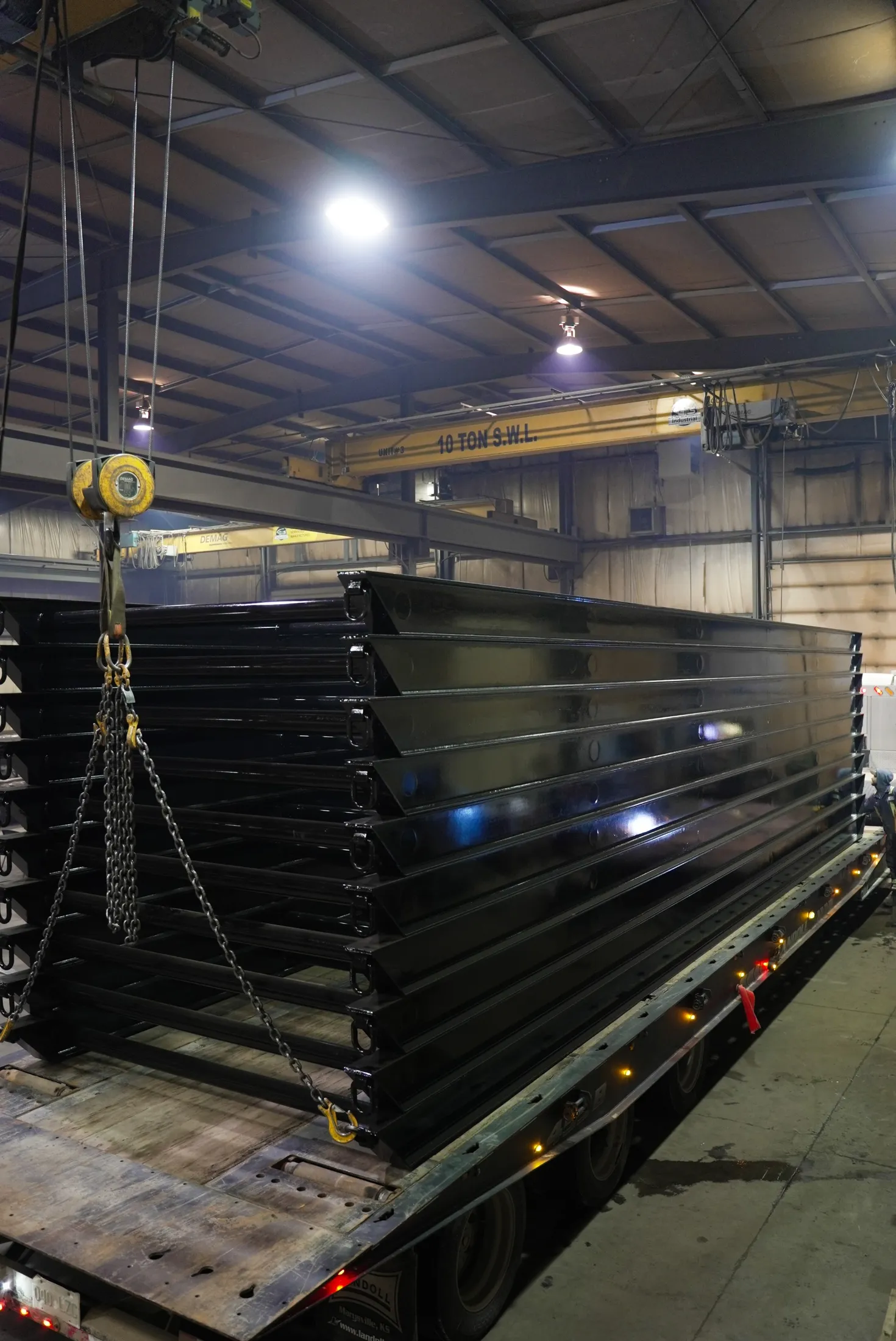
The steel skid is welded in Herauf's own shop. The unit travels on it, sets down on it, and lifts off again years later, so there is no poured foundation to wait on and no crane pad to build first. A gravel pad and a level site are the ground work. When the project ends, the same building goes to the next one.
What arrives
Each unit ships with its plumbing, electrical and HVAC self-contained, so on-site connection is fast once services reach the pad. Washroom and shower buildings are available in motel and hotel, washroom and shower, and cabin and cottage configurations. Every unit meets or exceeds CSA A277 and the National Building Code, with electric heat standard and solar optional.
How long it takes
The building is on the production line while the site is prepared, so the two timelines overlap. That is where the time saving of up to 50% against site-building comes from, and why units are set in days rather than framed over a season. On a remote site the schedule advantage is larger still, because trades never have to be flown in.
Where it has been done
NAIT's forestry campus at Kidney Lake in northern Alberta is a full remote campus: 14 dormitories, 56 rooms and 3 classrooms, delivered to a remote bush site with challenging road access. Federated Co-op runs Herauf washroom and shower units across its truck-stop locations. Both organisations have signed reference letters you can read.
Who it suits
Energy and forestry projects that move between sites, construction camps with a fixed end date, remote and northern communities that need housing before a permanent build can start, and any employer that would rather own the accommodation than rent it. The project results page shows the range.
Tell us how many people, where, and when: request a quote and we will come back with a layout, a delivery window and a written number.
Common questions
What is relocatable workforce housing?
Accommodation for a project's workers that is built complete off-site on a steel skid, set on prepared ground without a poured foundation, and lifted onto a truck and moved again when the project ends. Dormitories, crew facilities, washrooms and kitchens are all built this way.
How fast can workforce housing be set up?
Units arrive finished and are set in days. The building is on the production line while the site is prepared, which is how the approach runs up to 50% faster than building on site.
Does relocatable housing need a foundation?
No. The steel skid is the foundation. It is welded in Herauf's own shop, the unit travels on it, sets down on it, and lifts off it again years later.
Has Herauf built workforce housing at scale?
Yes. NAIT's forestry campus at Kidney Lake in northern Alberta is a full remote campus of 14 dormitories with 56 rooms and 3 classrooms, delivered to a remote bush site with challenging road access.
A skid-mounted commercial unit being set