A phased community housing development divides the programme into groups of homes or buildings that can be designed, prepared, delivered and handed over against a visible set of dependencies. The phase plan should connect housing need, model mix, site readiness, services and proposed delivery windows without presenting those planning dates as confirmed production commitments.
Start with the complete need, even if only Phase 1 is ready. A ten-home, 25-home or 50-home brief should record the total programme and then show what belongs in each phase. The number describes the owner's requirement, not Herauf's confirmed capacity, price or schedule.
Define the programme before Phase 1
Record the intended residents, bedroom mix, accessibility priorities, common specifications and any community requirements that affect the buildings or site. Separate detached homes from duplex, triplex or apartment-style scopes. The housing developments guide and multi-family guide explain those different paths.
A simple schedule can list each model or building type, quantity, proposed phase and current status. Mark unselected models as open decisions. This keeps a 10-home first phase connected to a possible 25-home or 50-home programme without implying that later groups have been ordered.
Give each phase an acceptance condition
"Phase 1 in spring" is not enough to coordinate a project. For each phase, record what must be true before delivery:
- The part of the site has the required approvals.
- Foundations or support systems are complete and verified for the project.
- Water, wastewater and power responsibilities are assigned.
- The final approach, staging area and placement space have been reviewed.
- Building specifications and requested changes have been agreed.
- Inspection, turnover and occupancy responsibilities are understood.
Use the downloadable development phasing worksheet to name the dependency, owner, status and decision date rather than hiding unresolved work inside a target month.
Separate site work from building work
Site and factory activities can overlap, but they remain connected. A foundation delay can change a placement sequence. A utility decision can change the building interface. An access constraint can change staging or transport planning. The responsibility matrix gives each item an owner and a status.
For larger programmes, divide the site into areas that can be safely completed and handed over. Record how construction access, occupied areas and later work will coexist. The appropriate arrangement requires the owner's consultants, authorities and project team.
Use decision gates instead of assumed dates
A useful phase plan has decision gates: brief confirmed, site information available, design reviewed, responsibilities agreed, approvals in place, site ready, delivery planning confirmed and handover complete. A proposed delivery window remains provisional until the responsible parties confirm the project-specific inputs.
Keep assumptions visible. If an approval, service route or road condition is not known, label it unresolved. That is more useful than inserting an estimate that later appears to be a promise.
Learn from delivered housing evidence
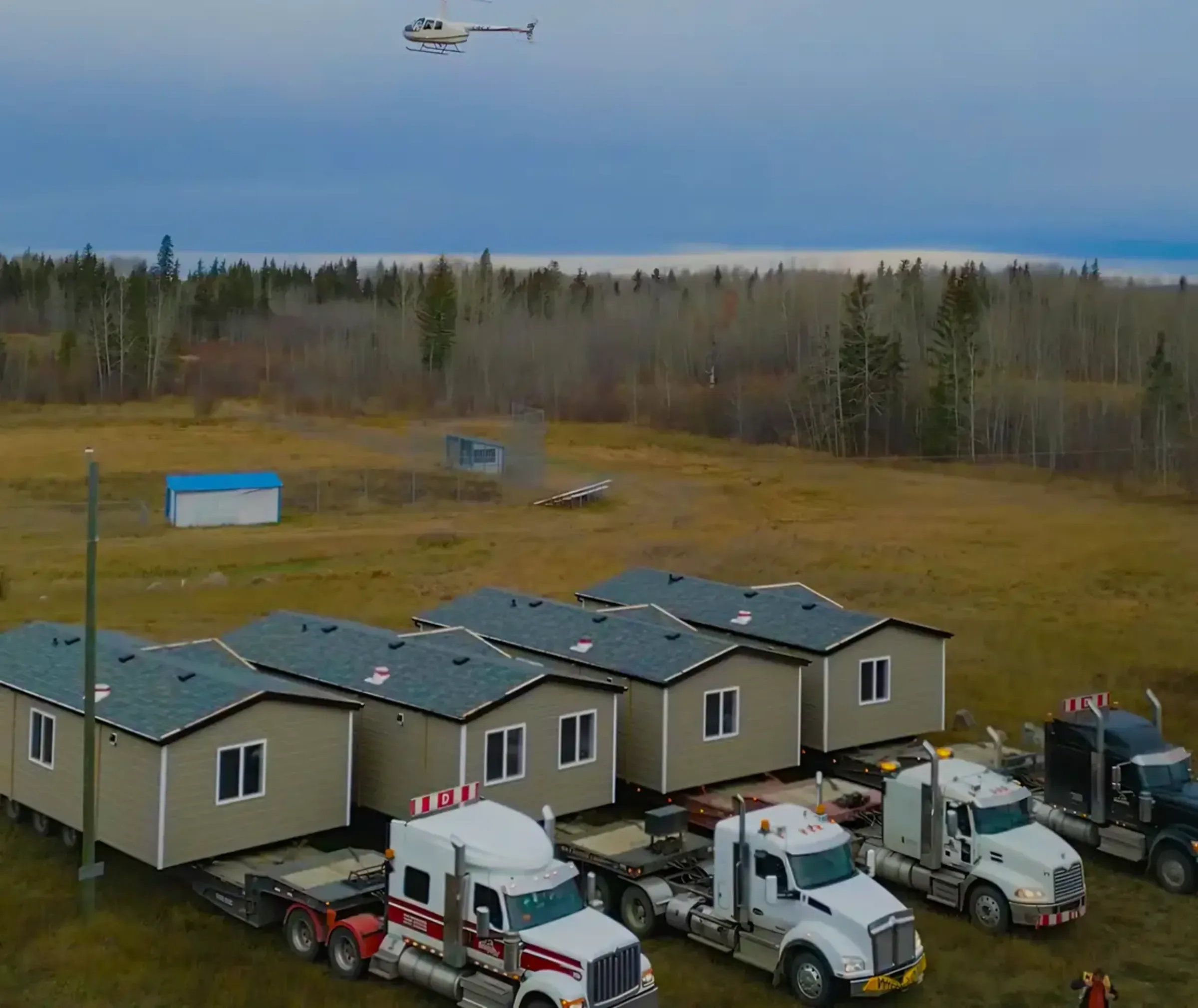
The Buffalo Lake Métis Housing project documents a 20-home programme. It is evidence of that delivered project, not a template price or schedule for another community. Compare the building type, site, route, services and responsibilities before deciding what transfers to a new brief.
For remote access and seasonal routes, review transport and site-access planning and the northern modular buildings guide.
Build one project record
Keep the total programme, phase schedule, responsibility matrix, decisions and proposal assumptions together. Start with the project brief workbook, then use the CSV templates on the planning resources hub for team workshops and proposal review.
Common questions
What is a phase in a modular housing development?
A phase is a defined group of homes or buildings tied to a prepared part of the site, a set of approvals and services, a proposed delivery window and a handover plan. A planning phase is not a production or delivery commitment until the project team confirms the scope and dependencies.
Should every phase use the same home model?
Not necessarily. The model mix should follow household, accessibility and community requirements. Repeated specifications can simplify decisions, while a mixed programme may better answer different bedroom, accessibility and occupancy needs.
What must be ready before a phase is delivered?
The project-specific list can include approved drawings, foundations or skids, access, staging, water, wastewater, power, placement equipment, inspections and handover responsibilities. The written project plan should identify the owner and status of each dependency.