Every September, first-year students in NAIT's Forest Technology program head to Kidney Lake, a field camp 50 km northwest of Whitecourt, Alberta. NAIT says they spend upwards of five weeks there at the start of their first semester, learning in the forest they will one day manage.
The camp needed rebuilding, and the date it had to be ready was not up for discussion. Students arrive when the semester starts. Herauf manufactured new dormitory buildings, classrooms and a food storage building for the camp and installed them in time for that intake.
A camp that had not changed in decades
The old camp's lodgings were built in the 1970s and 1980s. “We had cabins that were heated by wood,” instructor Rodger DeChamplain, a Forest Technology graduate, told NAIT's Tech Life Today. There was no electricity for refrigeration. NAIT describes the rebuild as the camp's first major upgrade in more than 30 years, funded with a significant investment from West Fraser through the Forest Resource Improvement Association of Alberta.
The new camp gives students temperature-controlled cabins and learning spaces, and a private room each where up to four people once shared a cabin. “Providing this space, it's like night and day,” said Dr. Agatha Ojimelukewe, dean of NAIT's School of Energy and Natural Resources.
Why the buildings were made somewhere else
Kidney Lake is a bush site with challenging road access and weather that does not keep to a plan. Building dormitories and classrooms there from the ground up would have put every trade on the same remote road, working outdoors, with the September deadline fixed at the far end.
Herauf moved the work indoors. The dormitories, classrooms and food storage building were manufactured in Herauf's controlled facilities, finished and closed in, then staged in the yard for transport. Rain and early snow at the lake had no say in how far along the buildings were.
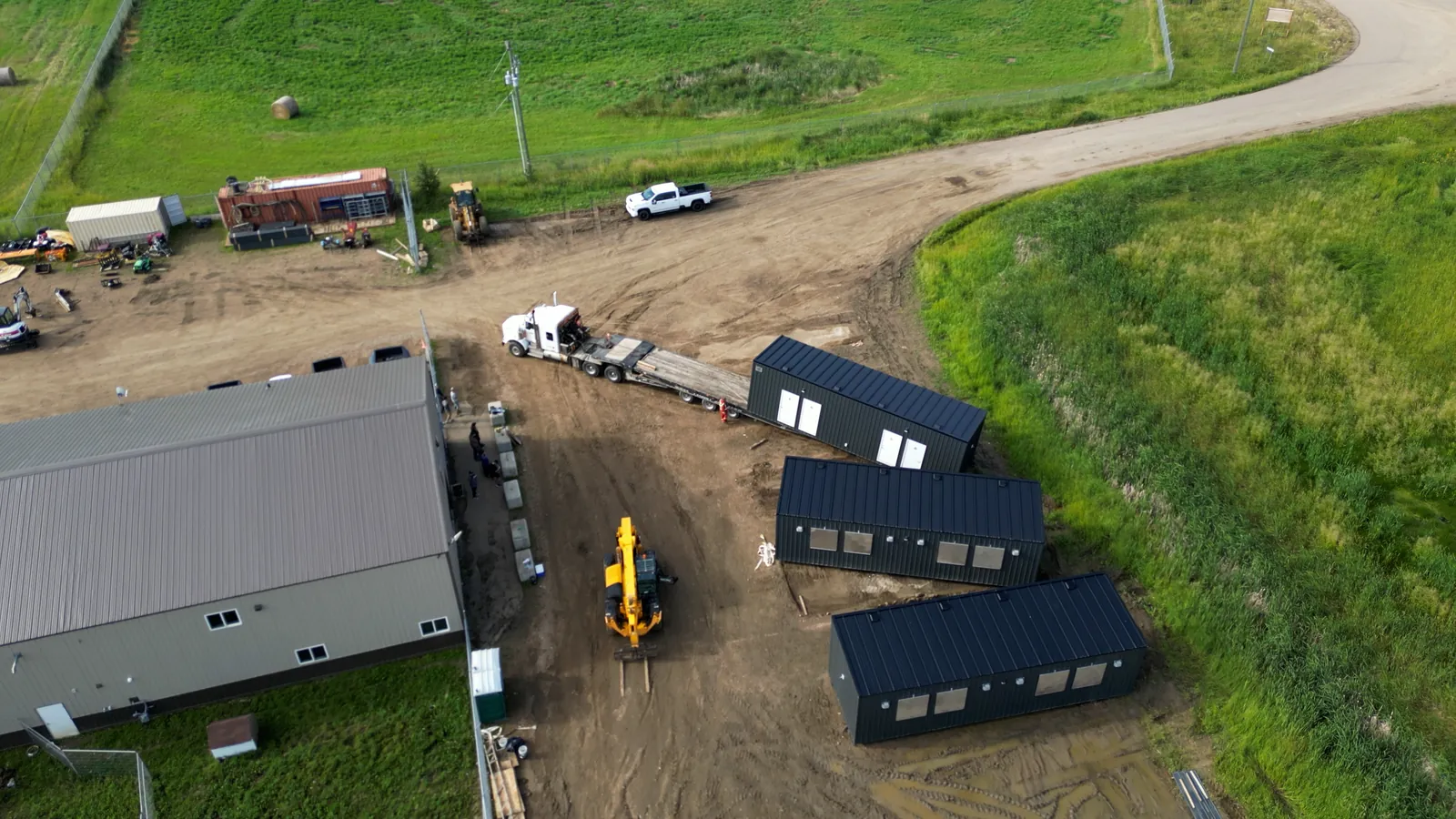
The buildings then travelled north by road and were installed at the lake. Because they arrived finished, far less of the work had to happen on the remote site, and less of the schedule depended on the weather there.
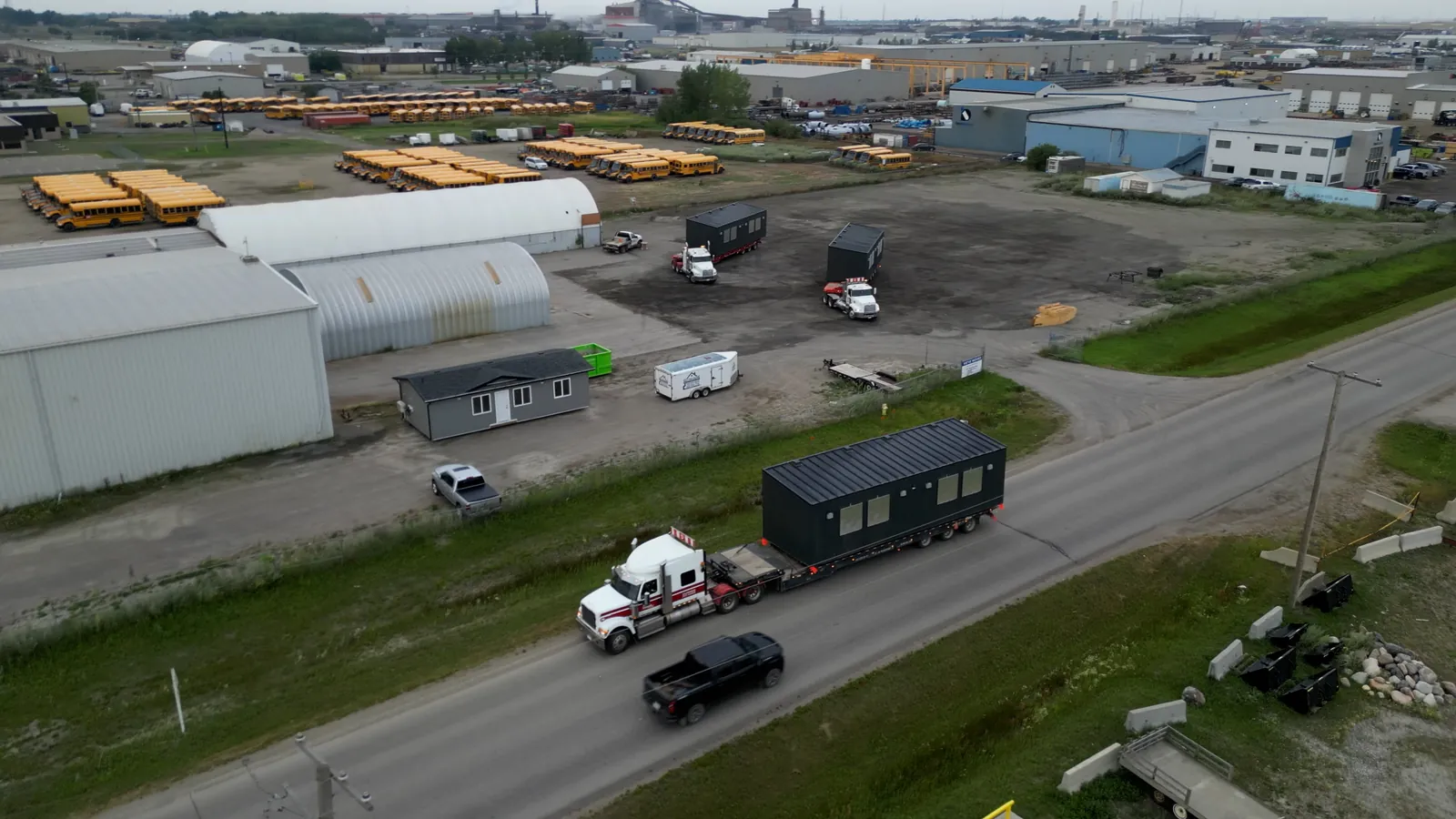
Ready for the September intake
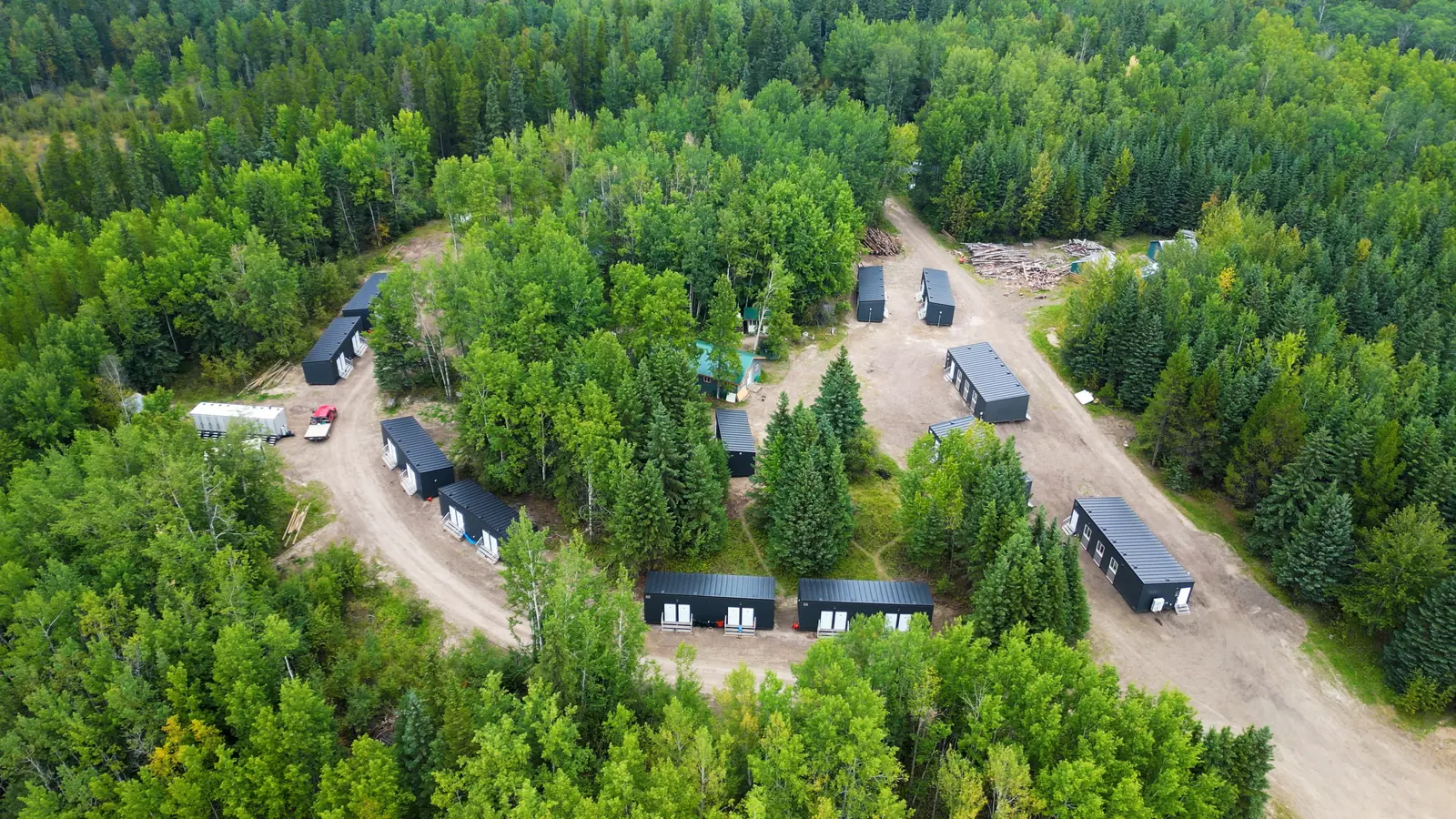
NAIT reports that the upgrades were finished in the summer of 2024 and that the September class of first-year students was the first to use them. The camp now sits along a gravel loop in the trees, with dark-clad dormitories, lettered doors and aluminum steps.
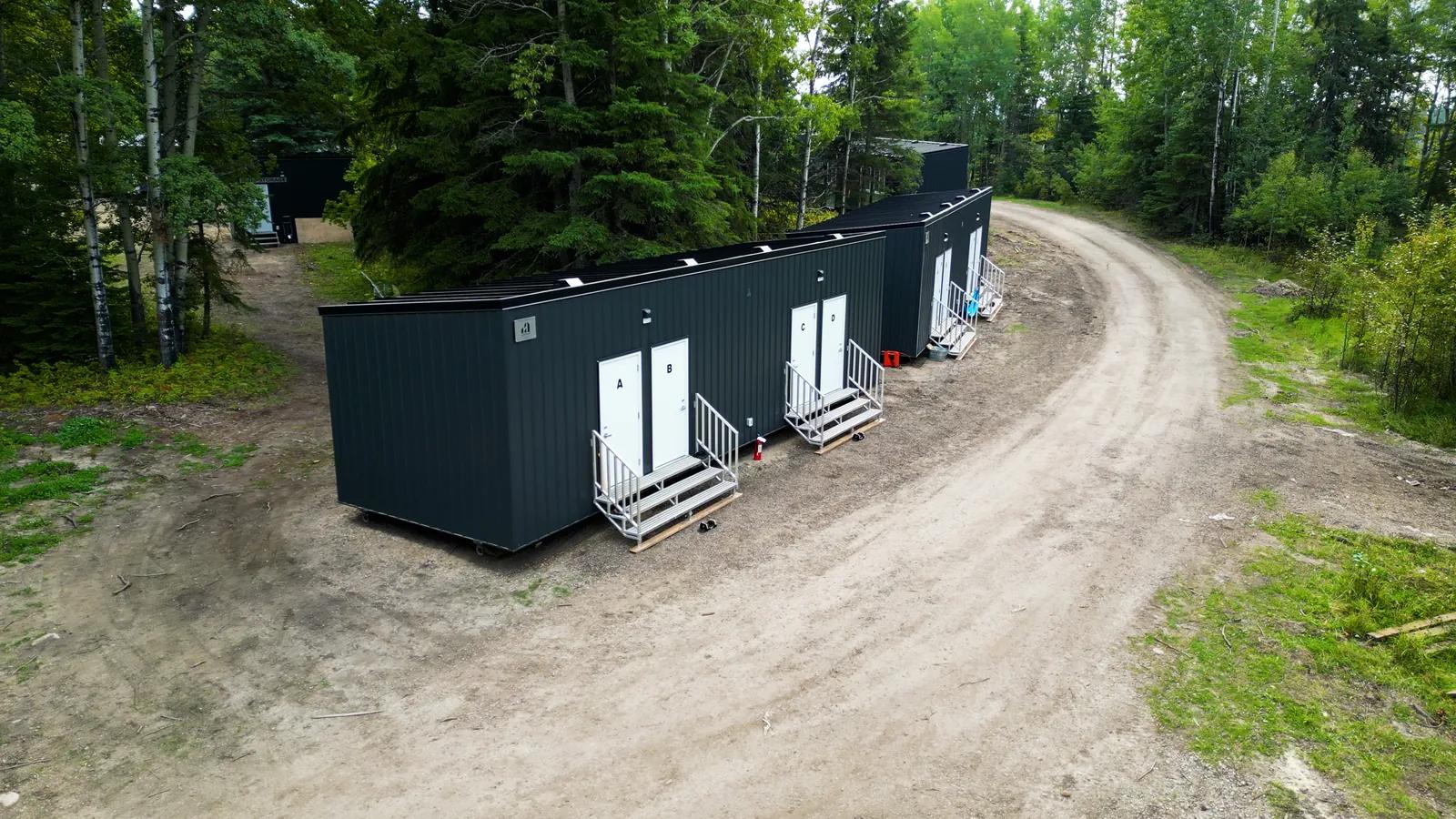
Instructor Ashley Lawson summed up what the camp is for: “They're constantly learning when they're out here together.” The buildings are the background to that, and they had to be ready on the day the students arrived.
What this means for your remote campus or camp
Field schools, research stations and remote training sites share Kidney Lake's problems: a hard opening date, a long road and a short building season. The questions to settle first are the same:
- Describe the whole programme. Sleeping, teaching, food storage and services depend on each other, so plan them as one camp, and decide what must open together.
- Walk the route. The access road, bridges and turning room decide module sizes before design is final.
- Work back from the opening day. Manufacturing takes as little as 16 weeks after drawing sign-off, permit and engineering approval, and setting takes days once the site is ready. Site preparation runs alongside.
Read the full NAIT Kidney Lake case study, and see how we approach camp buildings and education buildings.
Have a campus, camp or field school with a fixed opening date? Send us the site and the date and we will work back from it with you.
Sources
- NAIT Tech Life Today, Modern nature: Forest Technology camp sees first major upgrade in more than 30 years
- West Fraser, West Fraser supports Kidney Lake camp upgrades
Common questions
Can modular buildings go on a site without paved road access?
Yes, if the route is planned first. Module size and weight are set by what the access road and the trailers can carry, so the transport plan is settled before production starts. Kidney Lake is a bush site with challenging road access.
How do you build to a fixed opening date?
Manufacture indoors while the site is prepared, so weather on site does not hold up the buildings. Manufacturing takes as little as 16 weeks after drawing sign-off, permit and engineering approval, and installation takes days once the site is ready.
Who funded the Kidney Lake rebuild?
NAIT credits a significant investment from West Fraser, made through the Forest Resource Improvement Association of Alberta.