A highway washroom has one job, and it has to do it for everyone who pulls over: a trucker on a long haul, a family on a road trip, a traveller using a wheelchair. The Saskatchewan Ministry of Highways needed a dependable public washroom for travellers, and it needed one that was barrier-free.
Herauf built it in the plant, finished it inside and out, and delivered it complete with an accessible ramp, set on a prepared pad and ready for public service. This is how a building like that goes from the plant floor to the roadside.
Finished on the plant floor
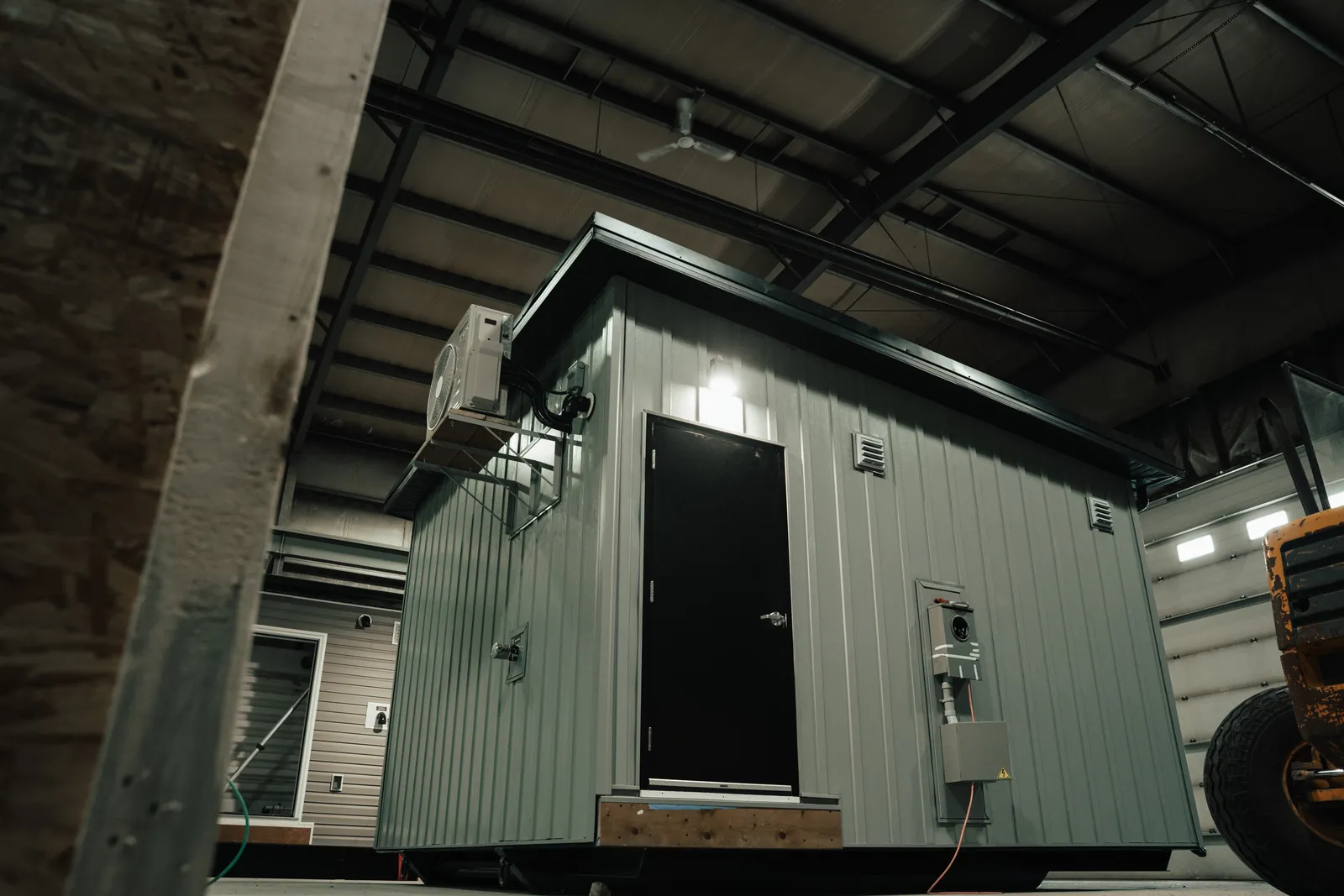
The washroom was manufactured in Herauf's controlled facility, where crews work on a level floor under cover in any season. By the time it left, it was clad in pale grey vertical panels with its doors, electrical meter base and heat pump in place.
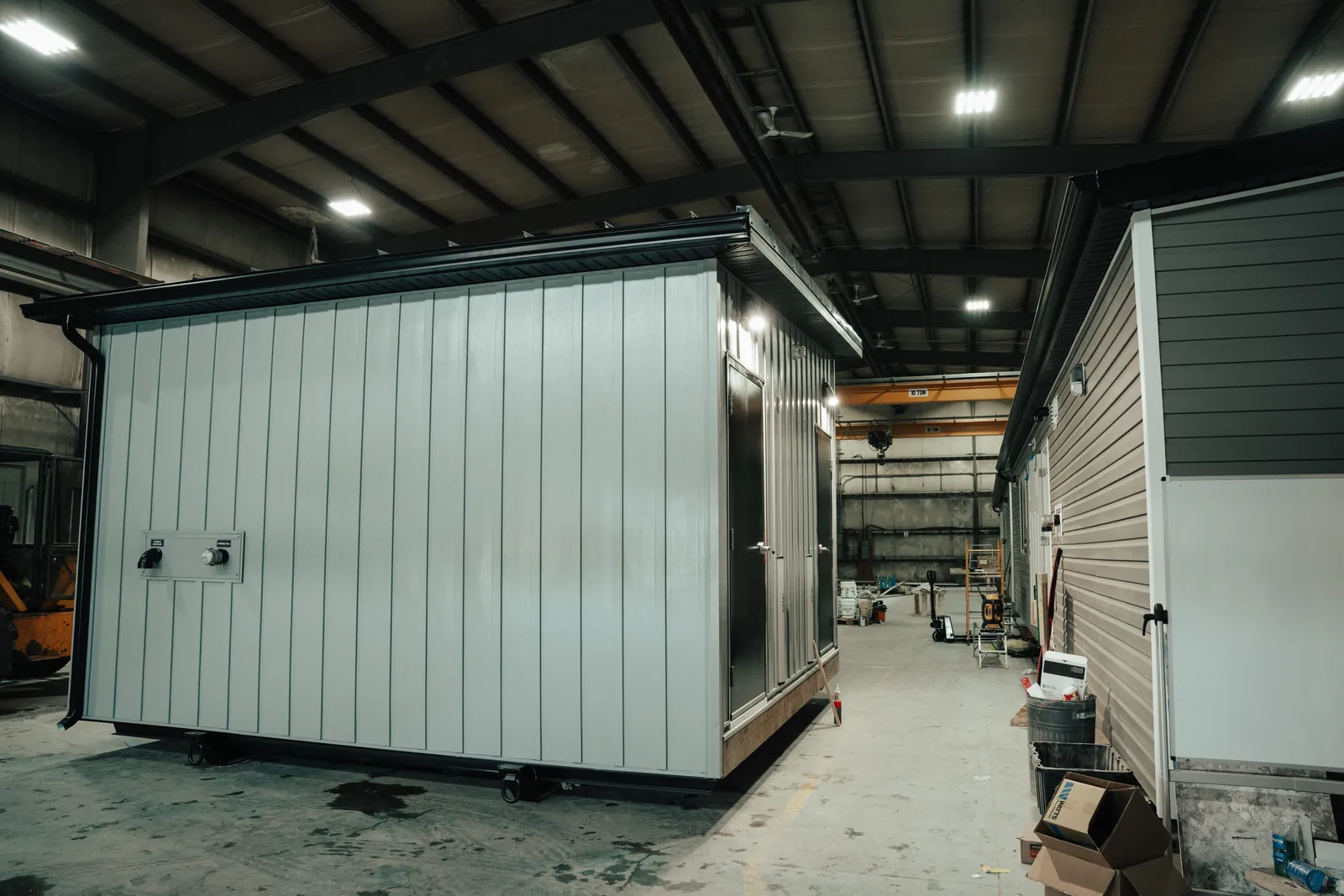
Finishing the services in the plant matters most for a public building. The water connections sit in a trimmed panel in the wall, the heat pump's outdoor unit hangs on a bracket under the roof edge, and the meter and disconnect are mounted beside the side door. All of it was installed and checked indoors, where a mistake is easy to see and quick to fix.
Out of the plant in winter
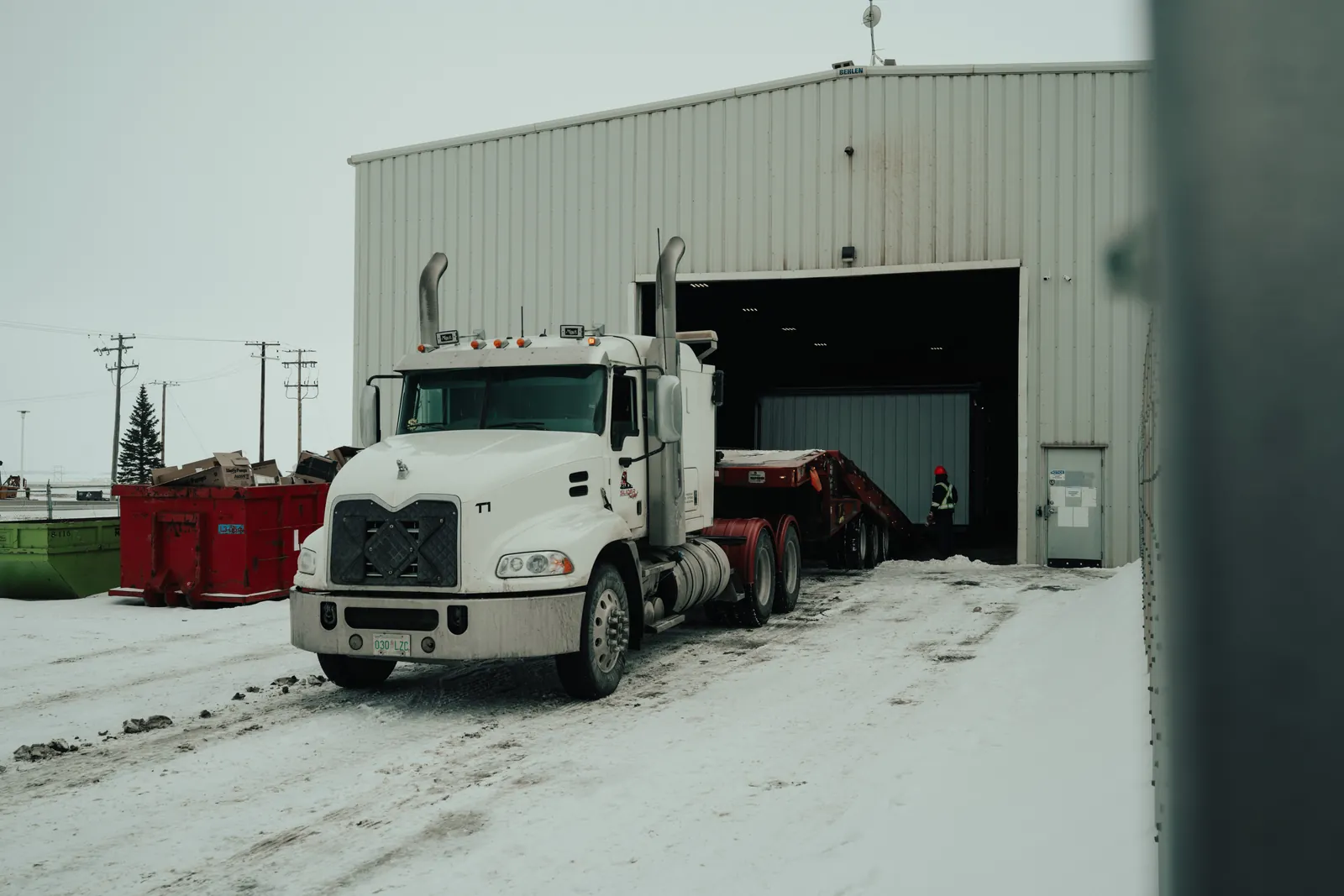
A forklift moved the finished building through the plant to the big door, where a semi and lowbed trailer waited in the snow. Weather outside the plant decided the day it travelled. It had no effect on how far along the building was.
Set complete on a prepared pad
While the building was being made, its paved pad was prepared on site. On arrival the washroom was set on the pad with its railed wooden ramp and deck, giving step-free access to the doors, and wooden steps with black steel railings at the end of the ramp.
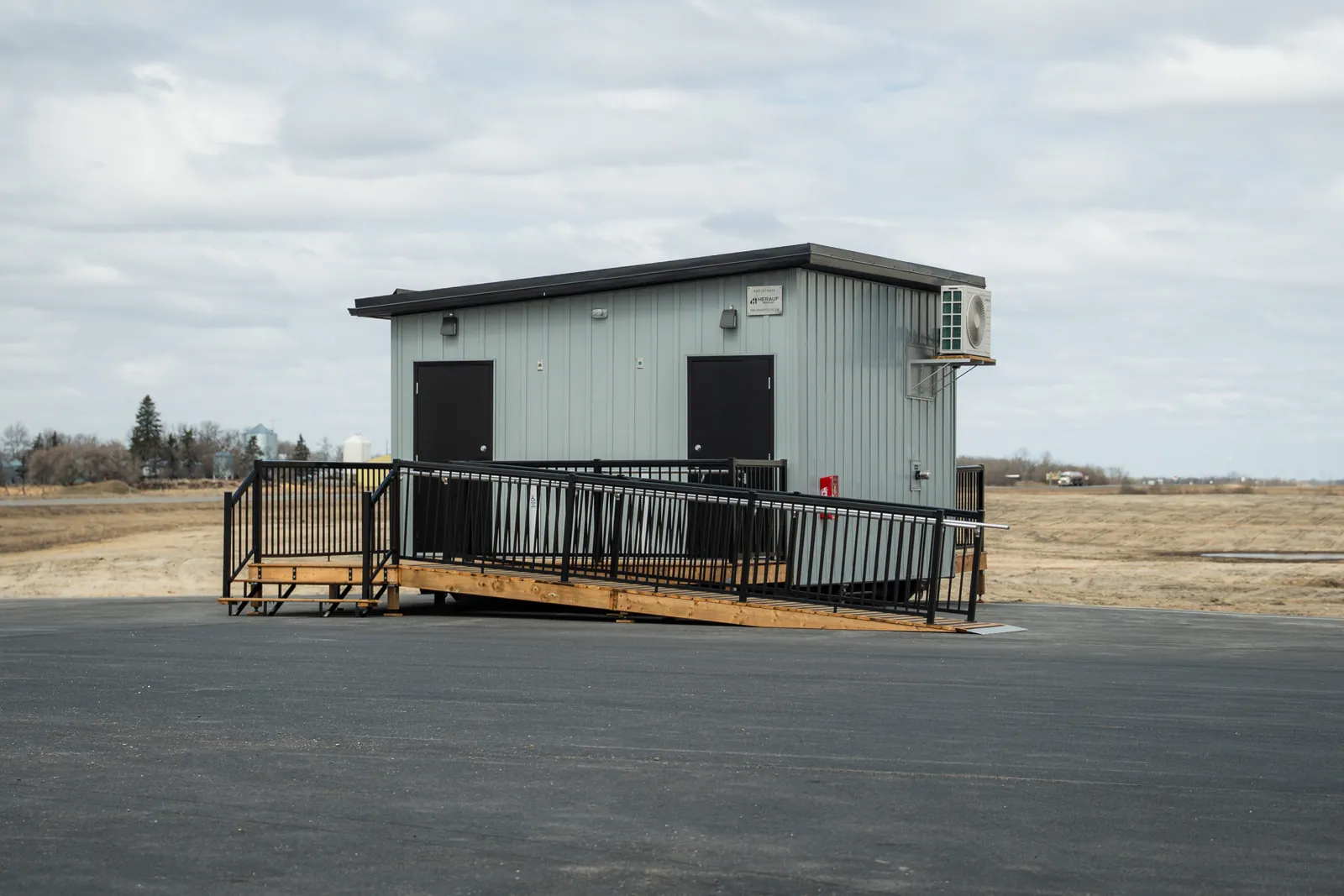
Because it arrived finished inside and out, the work left on site was setting it and making the connections. The washroom is now in service for the Saskatchewan Ministry of Highways.
Why a roadside site suits a building made elsewhere
A highway site is a hard place to build. Crews work beside traffic, often far from the nearest town, and every day on site means traffic control and travel. Building the washroom in the plant turns most of that site time into plant time. The pad and service work happen on site while the building is made, and the visit that puts the building in place is measured in days.
It also gives the owner a finished building to inspect before it ships. Fixtures, finishes and accessible details can be checked on the plant floor, in good light, by the people who will sign off on them.
What to specify for a public washroom
Highway rest areas, parks, campgrounds and transit stops ask the same things of a building. Settle these before a layout is drawn:
- Who uses it, and how many at once. Peak traffic sets the number of fixtures and whether showers are needed.
- Barrier-free access. Herauf offers nine standard barrier-free configurations; decide early whether every room or some rooms must be accessible, and where the ramp lands.
- Services. Municipal water and sewer, or self-contained water and sewer where there is no connection.
- Season and heat. Year-round buildings need heat and freeze protection; seasonal ones need a plan for closing down.
- The pad. Who prepares it, to what drawing, and when it must be ready for the delivery date.
See the Ministry of Highways case study for the full photo set, our washroom and shower buildings, and the guide to park and campground washrooms. Public buyers can find supplier details on the procurement page or download our capability statement (PDF).
Planning a washroom for a highway, park or public site? Send us the site and the users and we will suggest a layout.
Common questions
Does a modular washroom need municipal water and sewer?
No. Herauf builds washroom and shower buildings for municipal services or with self-contained water and sewer, which suits highway, park and remote sites without a service connection.
What does barrier-free mean for a washroom building?
Step-free access into the building and a layout people using a wheelchair or mobility aid can use. Herauf offers nine standard barrier-free washroom configurations, and the Ministry building was delivered with an accessible ramp.
How long does a modular washroom take?
Manufacturing takes as little as 16 weeks after drawing sign-off, permit and engineering approval. The pad is prepared while the building is made, and setting takes days once the site is ready.