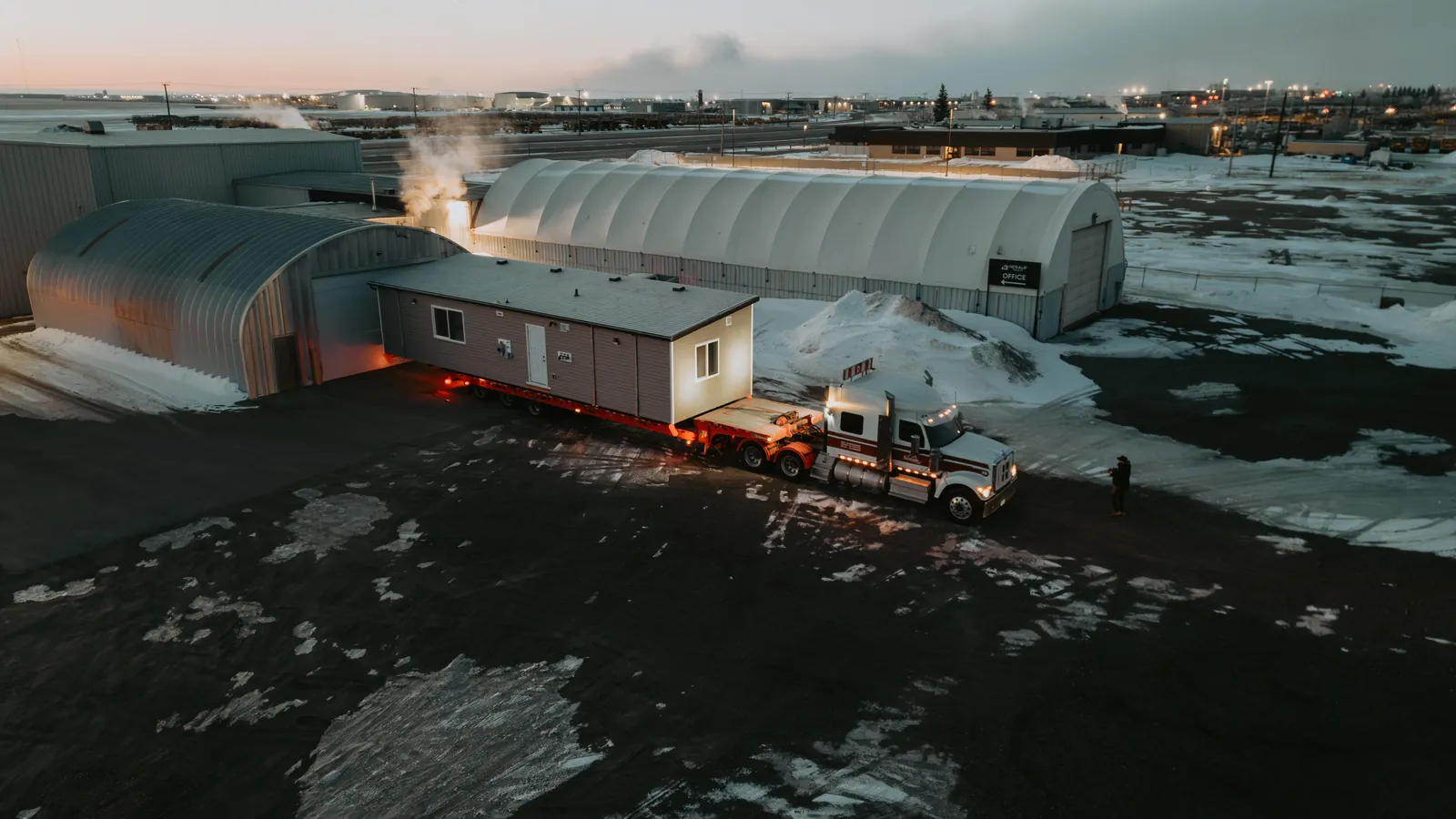
St. Theresa Point First Nation in northern Manitoba can be reached by ground only when the winter ice roads form. For a builder, that changes the order of everything. The date a home arrives is set by the ice, and the build has to be finished before that date comes round.
In March 2026 Herauf trucks left the plant carrying youth transitional homes for the Nation, a delivery reported by Eagle Feather News. This is how the project was planned around a road that exists for only part of the year.
The calendar belongs to the ice
Most construction schedules start from a contract date. This one started from the weather. “Because of the logistics, the weight and length of the units, we only have a certain window to deliver,” Laurie O'Connor, Herauf's administration manager, told Eagle Feather News. The roads close as conditions warm: “Anywhere near minus five (degrees) and they shut them down.”
When the convoy left on 15 March, she said, the ice roads had been open for only a week and a half. A home that was not finished and loaded by then would have waited for the next winter.
Build while the road is closed
The answer was to do all of the building in the months when nothing could travel. Herauf manufactured the homes indoors through the off-season, in controlled conditions where cold and snow do not stop the crews. The framing, services and siding were all done under a roof, long before the trucks were needed.
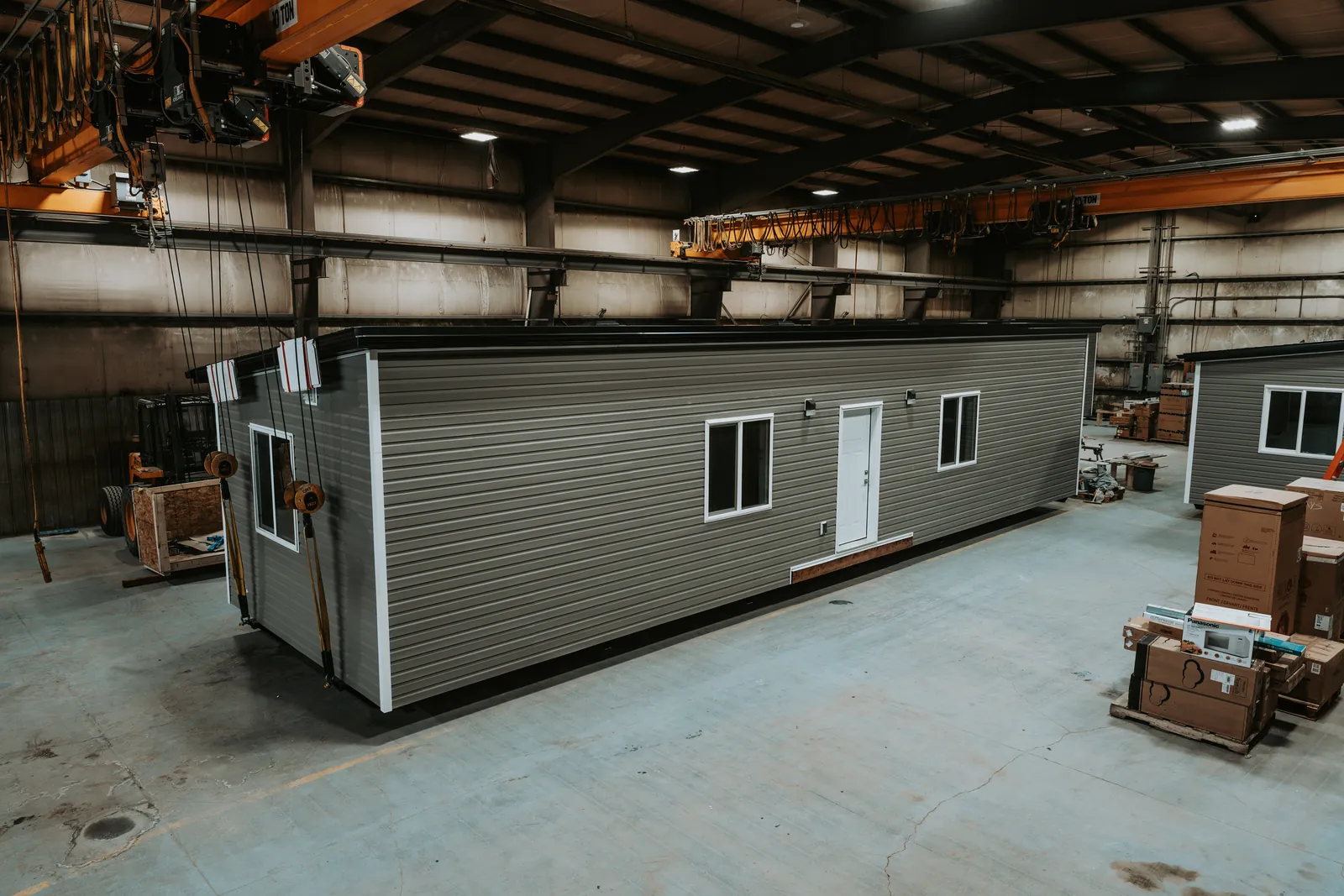
Finishing in the plant also moves the hardest work away from the site. Each home carries its water and septic connections on a labelled panel in the siding, so the crew at the community knows exactly what connects where. Kraig Bast, Herauf's director of corporate, described the aim to Eagle Feather News: “They're built easy to install, with basically zero site-interruption.”

Loading day and the road north
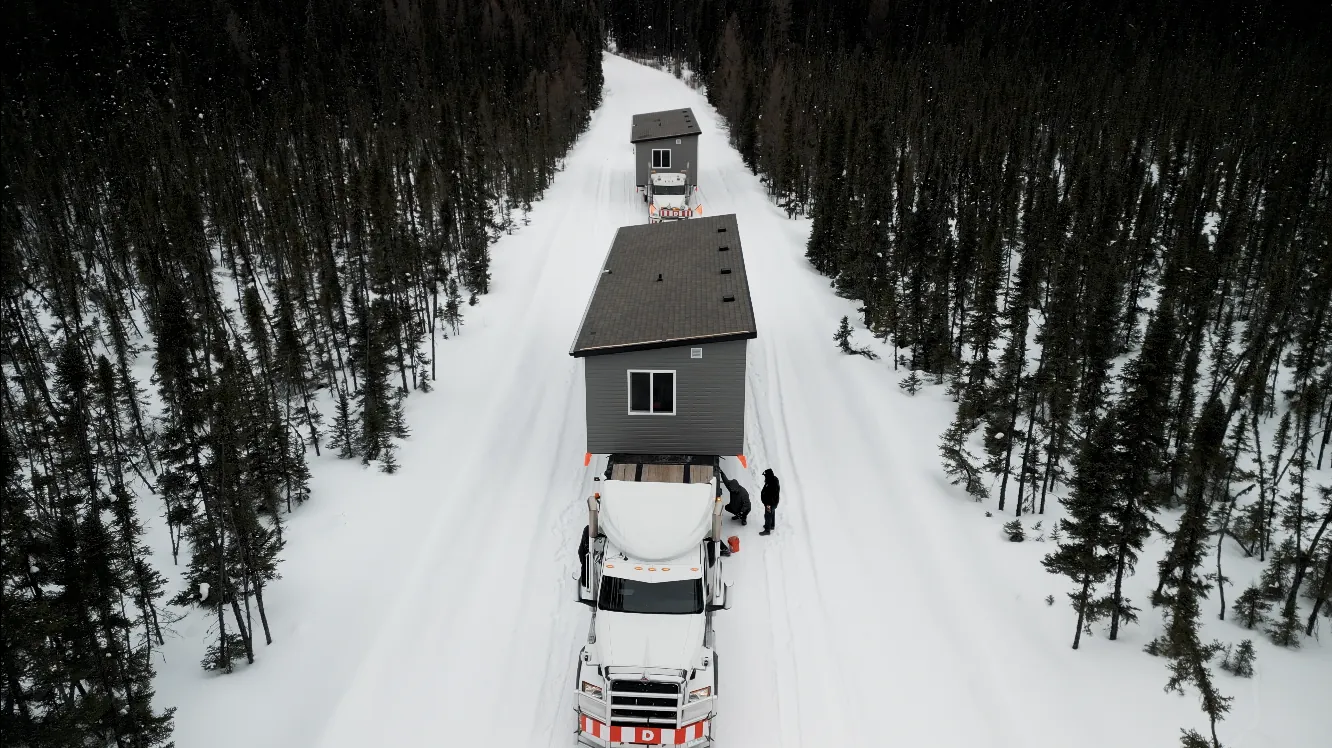
The finished homes were lifted onto lowbed trailers inside the plant and staged in the snow outside. Eagle Feather News reported that the convoy expected to spend three nights on the ice roads, with trucks often slowing to 20 to 30 km/h on rough ice, and that a Herauf representative travels with the convoy for the whole trip.
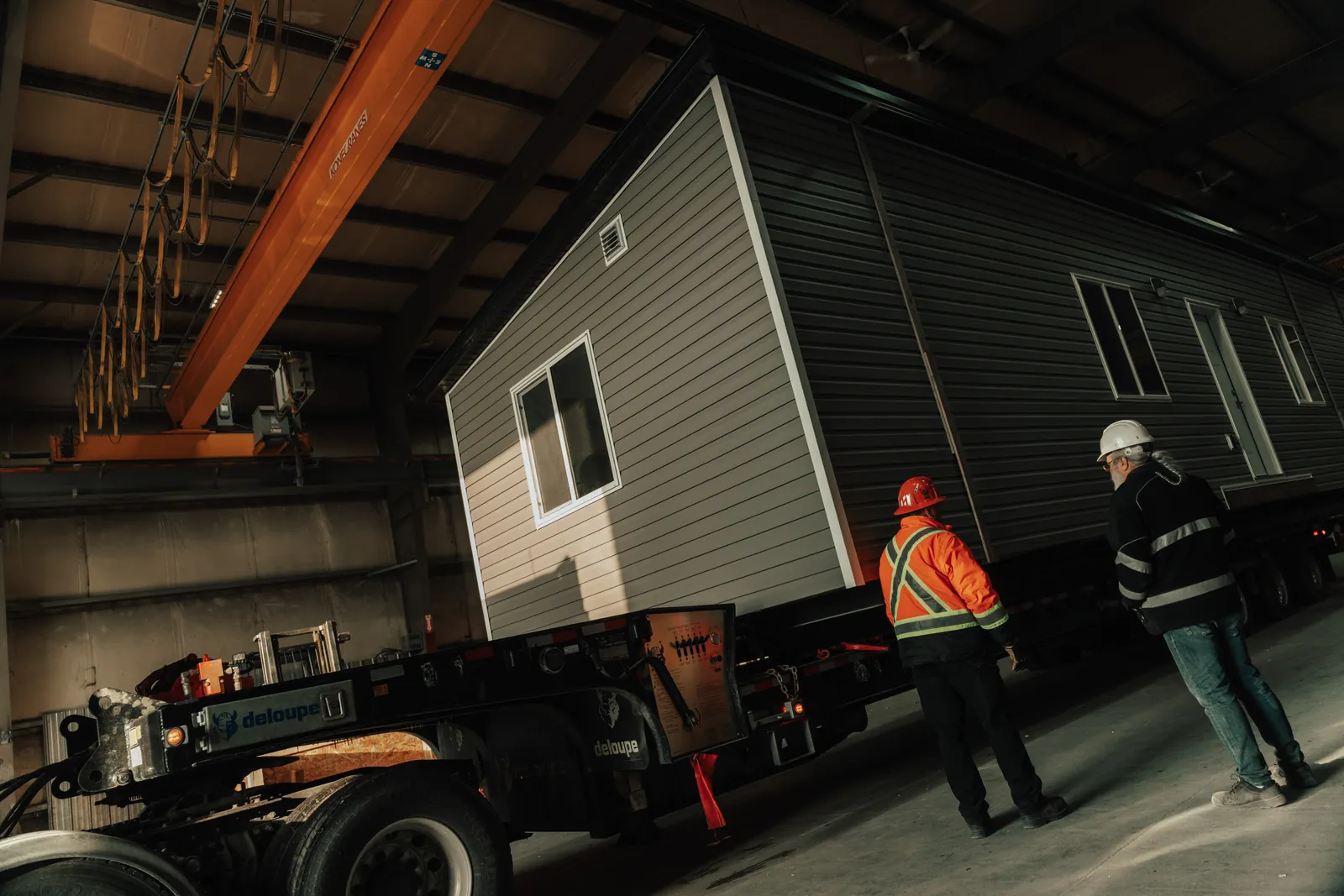
On a frozen road, care matters more than speed. A module has to arrive in the condition it left the plant, because repairs at the community are slow and costly. As Bast put it, “the resources up north are very expensive and often difficult to obtain.”
A second project with the Nation
Eagle Feather News reported that the youth transitional homes were the second project between Herauf and St. Theresa Point First Nation, after a building delivered the year before. The St. Theresa Point case study records both projects, with more photographs from the plant, loading day and the ice roads.
Planning your own seasonal-access build
The same approach works for any community that depends on a winter road, a barge season or a short summer. Three things decide whether the window is met:
- Start early. Manufacturing takes as little as 16 weeks, but only after drawing sign-off, permit and engineering approval. Count back from the expected road opening and add margin.
- Prepare the site in parallel. Foundations or supports, water, sewer and power at the community can be readied while the homes are built, so setting and connecting is all that is left.
- Plan the route with the hauler. Weight, length and road conditions decide what can travel, so module sizes are settled with the transport plan, before production starts.
Our pages on northern modular buildings and building through winter go further, and the guide to funding modular buildings for First Nations covers the programs communities use.
Planning housing or a community building for a fly-in or ice-road site? Tell us about your project and the season you are working to, and we will tell you what that window allows.
Sources
- Eagle Feather News, Regina company braving ice roads to deliver homes to northern communities
- CTV News Regina, Housing convoy set to travel to northern Indigenous community
Common questions
When does a build for an ice-road community have to start?
Work back from the season the roads are expected to open. Drawings, permits and engineering come first, and Herauf's manufacturing time of as little as 16 weeks starts after drawing sign-off, so a winter delivery is usually planned the spring or summer before.
What happens if the ice roads close early?
The roads close when the weather warms; Herauf's administration manager told Eagle Feather News they shut down near minus five. A home that misses the window waits for the next winter, so the schedule aims for the early part of the season and keeps its last weeks as margin.
Are the homes finished before they travel?
Yes. They are manufactured and finished in a Herauf plant, with labelled water and septic connections on the outside wall, so the work left at the community is setting them and making the connections.